The Father-Son Duo Traveling the World to Unlock Longevity’s Secrets — Interview with Marek Piotrowski
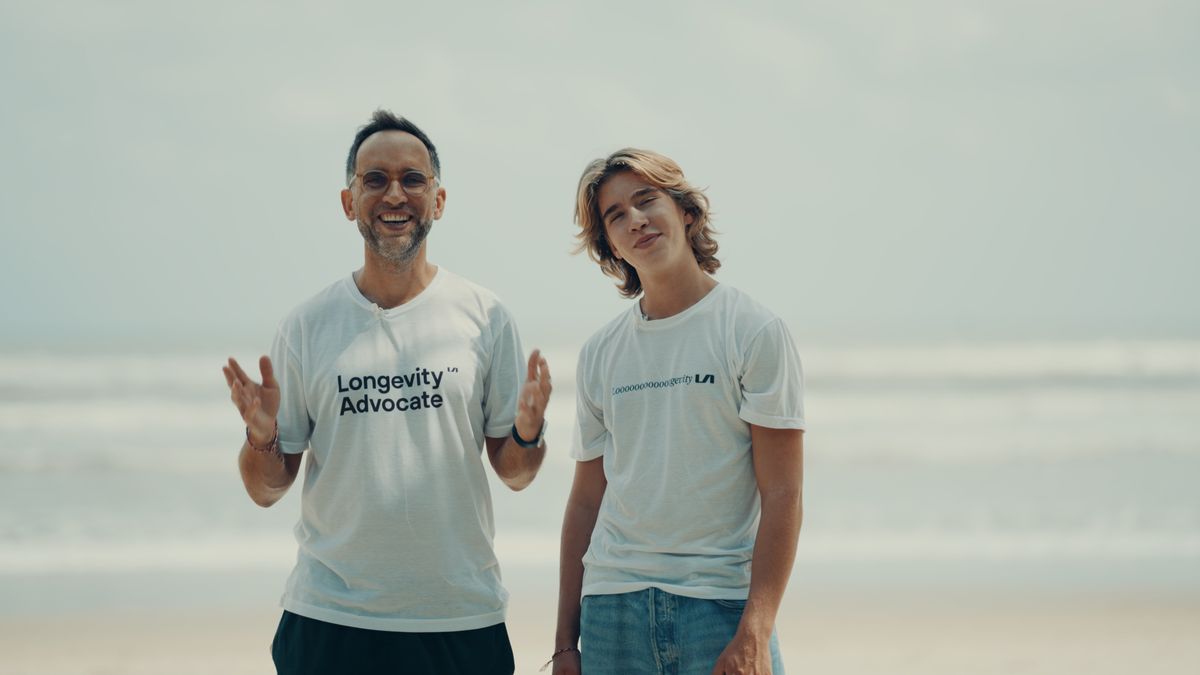
Marek Piotrowski and his son Aleksander spent a year on an extraordinary mission: traveling across 39 countries and 5 continents to interview over 100 of the world’s leading longevity scientists, doctors, and experts. From high-tech labs and top universities to remote Blue Zones and cutting-edge longevity clinics, this father-son team immersed themselves in the protocols, therapies, and lifestyle habits that could help us all live longer, healthier lives.
A former marketing strategist turned longevity advocate, Marek’s mission goes beyond personal optimization. He’s determined to make longevity scientists famous, believing that by giving researchers the spotlight, funding, and support they need, we can accelerate breakthroughs that benefit everyone.
Now, Marek and Aleksander are transforming their journey into a documentary, book, and educational app designed to inspire millions.
Their message: our future can be bigger than our past, and together, we can co-create a culture where longevity, health, and joy are built into everyday life.
Welcome to Live Beyond.
1. What’s the defining moment that shifted you from casual health interest to founding Longevity Advocate?
The defining moment happened seven to eight years ago at a small Microsoft conference in San Francisco with about 60 attendees. The event focused on emerging technologies that could change the world in the next 20-30 years. A presentation by Extreme Future Technologies and Forecasting on innovations like cryopreservation, space exploration, and orbital solar power plants sparked my eureka moment.
I realized I wanted to contribute to making the world better through meaningful change, not just profit. The focus on longevity resonated deeply—I decided I needed to live at least 200 years to participate in future endeavors like space exploration.
Finding like-minded individuals was initially challenging, but as the field grew, I eventually left my job to pursue this mission full-time. When my son asked for a gap year before university, I suggested we travel the world together, visiting longevity research centers in the U.S., Europe, Australia, Japan, and the Blue Zones. We planned this journey quickly, sketching it out on a restaurant napkin.
To prepare, I built my personal brand, launched the Longevity Advocate webpage, and immersed myself in longevity science literature. This entire experience led me to dedicate myself fully to advancing longevity and making a positive impact in the field.
2. You embarked on a year-long longevity quest with your son. What sparked this idea, and what have been the most surprising discoveries?
I started by creating a “longevity map” of what I knew, then planned to travel and fill in the gaps. I organized it into three pillars: longevity basics, biohacking upgrades, and radical life-extension tools, with prevention connecting them all.
Originally, the journey was about meeting top scientists and biotech companies to identify where I could help using my background in marketing strategy and brand building. About a month before departure, a filmmaker friend suggested making a documentary. Initially resistant, I eventually embraced the idea and bought Netflix-approved equipment.
Bringing my son Alek happened right before the trip. When I told him about the documentary, he pushed back, saying he wasn’t an advocate. I asked if he takes care of his health, fitness, and diet. When he said yes, I explained that made him a biohacker—and if he learned more and shared with his peers, he could become a longevity advocate. Two weeks later, he was interviewing top scientists alongside me.
The biggest surprises:
Prevention is undervalued. Despite being foundational, regular diagnostics don’t get the attention they deserve. Major diseases like heart disease, cancer, diabetes, and neurodegenerative conditions often begin developing 20-30 years before detection. Early knowledge is crucial, yet most of us—including me—postpone diagnostics. Longevity clinics offer comprehensive testing and integrated expertise that can identify patterns across multiple specialists.
The healthspan vs. lifespan debate. At conferences, I kept hearing “lifespan isn’t important, healthspan is.” This started to annoy me. We already know how to extend healthspan by 20-30 years—the limiting factor is implementation, not science. I believe scientists should dedicate meaningful effort to genuinely extending lifespan, because healthspan will follow when we do things right.
Generational perspectives matter. Having my son’s viewpoint alongside mine has been invaluable. We’re a generation apart, so we see things differently. This variety helps when empowering people around longevity, health, and the joy of life. One defining moment was interviewing Peter Diamandis (founder and chairman of the XPRIZE Foundation, and cofounder of Human Longevity, Inc) in LA. It showed me deeply how our movie “Live Beyond” can change perspective—not just in the masses, but also in the pioneers of longevity.
3. You’ve interviewed dozens of longevity experts. What’s the one piece of advice that shows up consistently across ALL of them?
Mindset. Every expert I’ve interviewed—geroscientists, geneticists, nutritionists, doctors, yoga masters—eventually emphasized that everything starts with mindset.
With the right mindset, we can prioritize wellness over convenience, which is the most critical shift. We also need to realize and own that our future is bigger than our past—to look forward rather than backward. If we don’t look forward to the future, we’re going to die sooner than we should.
4. What’s one popular longevity trend you think is overhyped, and one underrated practice most people ignore?
Underrated: Diagnostics. We don’t do enough testing, and even when we do, we receive fragmented advice from different specialists. Longevity clinics and quality longevity apps help by consolidating everything in one place, where six or seven experts can identify patterns and provide comprehensive guidance. This integration is what most of us lack.
Overhyped: Many biohacking interventions. I don’t attend many biohacking conferences because I believe about 80% of what’s presented is placebo. While some devices genuinely work—red light therapy, HBOT, properly applied microneedling—many therapies make dubious claims like “removing toxins” or promise “black sweat” as proof of detoxification.
Too many companies focus on tiny improvements that don’t create meaningful change while ignoring the big interventions we can implement ourselves through basics. The fundamentals matter most.
5. If someone in our community has €3,000 to invest in their health optimization this year, how would you allocate it?
Here’s how I’d structure the investment:
~€1,000 on baseline testing: Function Health-style comprehensive blood work and full-body MRI to establish your starting point.
Consider GLP-1 medications: Many scientists say second-generation GLP-1s (like Mounjaro, a dual GLP-1/GIP agonist) are among the best longevity drugs available, with third-generation options (GLP-1, GIP and glucagon agonists like Retatrutide) coming soon. They enable caloric restriction while gaining muscle simultaneously. Follow the right protocol with strength training and proper diet, microdose for a couple of months, establish healthy habits, then stop. Repeat twice yearly for two months. Consult with a doctor—I’m not one, but this approach has shown amazing results in my experience.
HBOT therapy: I haven’t had the chance yet due to constant travel, but hyperbaric oxygen therapy shows remarkable results for injury recovery, heart health, and mental health.
Psychedelic therapy: MDMA or ketamine sessions. I’m speaking from experience—MDMA-induced therapy is how I healed my trauma and changed my life completely.
Skincare investment: Your skin is the shield for all your organs—invest in quality care.
Quality gym membership: Ideally with sauna and cold plunge access. Use it regularly. Research shows that doing sauna 4-7 times weekly lowers all-cause mortality by 40%. Interestingly, having sex once a week shows similar results—and hopefully that doesn’t come from this budget.
Annual retreat: This might push the budget, but retreats work miracles for mindset and meditation practice.
Purpose work: Reading a few books on finding purpose is inexpensive but invaluable. Purpose gives meaning to life, and pursuing a mission makes every day better. This positively impacts health, mindset, inflammation levels, and happiness.
It’s not just about healthspan—it’s about truly living. That’s why I say “live beyond.” Live more. Really live. Don’t be an NPC character following a script. Live your own life.
6. What biomarkers should every 35-50 year old track annually, and which expensive tests are just vanity metrics?
Essential annual tracking:
∙ Comprehensive blood biomarkers
∙ Hormone panels
∙ Nutritional deficiencies
∙ Full-body MRI for cancer screening and cardiovascular/heart assessment
∙ Continuous glucose monitor (CGM) once yearly to track glucose levels
∙ VO2 max (ideally twice yearly or more to verify improvement from exercise protocols)
Every 1-2 years:
∙ Psychological assessment
∙ Strength testing
I’m not a doctor, so consulting with a longevity clinic for personalized recommendations would be ideal. I can provide a detailed biomarker table if you’d like more specifics.
7. Walk us through your personal daily non-negotiables—the 3-5 things you do every single day regardless of travel, stress, or schedule chaos.
1. Sleep optimization: No coffee after 4pm. Bedroom dark, cold (if possible), legs elevated. Aim for bed around 10-11pm for eight hours of sleep.
2. Nutrition priorities: Focus on protein plus carbs only from vegetables, nuts, and occasionally small amounts of potato. Avoid processed carbs.
3. Daily exercise: If I don’t exercise, it impacts my sleep and wellbeing. I prioritize strength training above all—travel taught me its importance. Aerobic exercise, yoga, and fun sports like rock climbing are additions, not substitutes.
4. Sauna minimum 4x weekly: The statistics are compelling—we simply must do this.
5. Flow state practice: I achieve this through journaling (writing without overthinking) and flow-inducing sports like surfing or rock climbing where you stop thinking and just act. This makes me truly happy.
Bonus non-negotiable: Avoid news and horror movies. Why fill our minds like trash bins? Scan headlines if necessary, but don’t go deep. Instead, create your own news—positive stories about science and growth, not daily doomsday content.
8. How do you approach the reality that many longevity interventions won’t show “results” for 20-30 years? How do you maintain motivation?
Most interventions give us results immediately. If we feel better, healthier, and stronger, that’s an instant result that powers us to maintain these routines.
When you take care of what you eat, how you sleep, do regular diagnostics, engage in psychedelic therapies, care for your skin, take the right supplements to address deficiencies, and monitor daily—the results are instant.
But beyond subjective improvements, science is accelerating verification:
NASA’s time machine technology: Developed with David Fuhrman, this uses microgravity to age your cells by five years in one day. It shows where your cells are heading, what to focus on, and how to take care of yourself. The company is already applying this to organelles—tiny livers, minds, hearts. This will dramatically speed up longevity research.
Digital doppelgangers: Soon we’ll have digital twins that, powered by AI growth and the proliferation of body sensors and implants, will project what will happen to us in 10-20 years. We’ll know so much more.
We already know a lot about what to do, how to take care of ourselves, and how to feel better. Soon we’ll be able to project the future with precision.
9. Most longevity content is US-centric. What advantages do European health optimizers have? And which European longevity clinics should our DACH audience know about?
Where the research is: Most longevity research happens in the US—California, Boston, and New York. Singapore is the second major hub, where Brian Kennedy is building a massive center with Andrea Maier and other scientists. London surprised me as Europe’s strongest longevity research center. The Babraham Institute alone employs around 800 scientists working on aging and longevity.
Europe’s advantages:
Superior medical system: We have much better healthcare infrastructure than the US.
Work-life balance culture: We have holidays—they don’t. The American culture of working 24/7 is detrimental. Europeans understand the importance of rest, which fundamentally benefits longevity.
Clean environment and food quality: Europe offers cleaner water, better food quality, and access to wellness infrastructure.
If I wanted to live longer and better, I wouldn’t move to the US unless I could relocate to Novato, California (statistically the best zip code for longevity)—but not everyone can do that.
About European longevity clinics: I haven’t had time to thoroughly research all European options, as I concentrated on US and Singapore facilities. Many European clinics exist, but many focus on wellness rather than science-based interventions.
My call to European longevity clinics: Please do science, not just wellness. Many are overpriced without offering scientific rigor. Work together, and partner with clinics with the biggest databases (like HLI California) to fuel your analytical models and better find the patterns in the diagnostics for your patients. Together is better!
Bottom line: We’re one interconnected world—we can optimize our health anywhere. But here in Europe, it’s easier. Clean water, great food, excellent gyms, access to medications, and a better societal approach to wellness.
10. You’ve got a movie launching, a book being published, and you’re scaling Longevity Advocate. What’s driving all of this? And where do you want this to be in 10 years?
What I’m building:
The movie: People are usually afraid of science because they don’t fully understand it. We’ve decided to give them the science through the backdoor of their brains while showing them an emotional story of father and son traveling around the world and learning about longevity together as a family. Our original mission-driven project spotlights longevity and the scientists we met, helping them grow their research and funding.
The series: A deeper dive into the science, following the movie.
The book: Written as a “longevity game” to make the science accessible and engaging. It launches simultaneously with the movie and is based on hundreds of interviews with experts—their voices, not mine.
The app: A fun, gamified educational platform about longevity with a crucial feature—users can directly donate to scientists featured in our content. Scientists need our support in every possible way.
What’s critical to understand: This isn’t about me or my son. We’re just a spark to inspire people. We are the voice for the scientists, experts, doctors, and everyday biohackers we met. I’m not claiming to know everything—I know people who do, and I’m learning from them.
I’m not Bryan Johnson seeking fame. I want to make scientists famous. I want them to get attention and funding. By helping them, I help all of us—myself included.
What drives me:
I look in the mirror every day. I feel strong and amazing—better than I did at 20. But I’m aging every day, and I don’t want it to stop there. I want us to start rejuvenating ourselves—our organs one by one, then maybe the whole body.
The science is getting there. Radical life-extension tools—gene therapies, partial epigenetic reprogramming, 3D bioprinting—will change everything. More is coming thanks to AI advancement.
I want to ensure this future is available for us—for me, my family, my friends, and everyone. I want our future to be much bigger than our past. That’s my motivation. That’s my mission.
About Longevity Advocate: It’s my personal brand—it’s who I am. I want people to identify themselves as longevity advocates. Being a longevity advocate means not just talking about longevity and inspiring others—it means helping the longevity field grow in as many ways as possible.
We need everyone: Bankers, lawyers, judges, journalists, doctors, scientists, CMOs, CTOs, COOs. If we dedicated ourselves to longevity instead of working for Coca-Cola, Pizza Hut, Burger King, alcohol, or tobacco—we would accelerate progress dramatically.
My broader vision is Live Beyond:
∙ Live longer, live healthier
∙ Live more joyfully
∙ Live beyond the boundaries society sets for us
∙ Don’t be an NPC—be a player in your own game
I chose a domain "LiveBeyond.World" for my project - because it's about us all, about our whole world. About changing the world together. Just like I got inspired on this tiny conference in San Francisco.
My hope for 10 years from now: When my son looks back, I hope he’ll see that we helped the longevity revolution grow. If our movie and series reach 100-200 million people, that snowball can create massive momentum.
The longevity field most needs communication and education right now. When hundreds of millions start learning about longevity and demanding it from institutions and governments, everything will accelerate.
The movie, series, book, podcasts, and app are just tools. The heart is the mission—to empower people to live beyond and empower scientists to help us live beyond.
How we do this: By co-creating a new culture with longevity, health, and joy built into it. Let’s all co-create a culture that will change everything and let us live ultimately much longer.

Author: Kama Woy
I help companies grow while obsessing over how to make humans live longer and better. Most of my free time goes into world exploration (I’ve been traveling for 13 years), meditation, and longevity experiments, but I also do Butoh dance - basically the weirdest, most intense form of movement you’ve never heard of. I’m fascinated by the tension between optimization and surrender, systems and chaos.