Knowledge
Magazine
-

The 24-Hour Sleep Model: Why Better Sleep Starts the Morning Before
8 min read
-

Eating for Longevity: Lessons From the World's Oldest People
9 min read
-

The Summer Health Kit: Supplies and Gadgets for Hot Days and Warm Nights
9 min read
Weekly picks on longevity, brands, and health science. No spam—unsubscribe anytime.
Tools
- →The 30s Longevity Guide for Women
- →Postpartum Recovery Guide
- →Perimenopause Longevity Guide
- →Dopamine Reset Guide
- →Pregnancy Longevity Guide
- →Peptide Guide
- →Home Detox Guide
- →Slow Aging Guide
- →Pro Supplement Guide
- →Safe Supplement Guide
- →Bio Age Calculator
- →Blood Testing Guide
- →Deep Sleep Guide
- →Pro Longevity Dashboard
By Category
By Goal
Knowledge
- →What is Longevity?
- →Improve diet
- →More focus
- →Look younger
- →Lose weight
- →Track biomarkers
- →Improve sleep
- →Build muscle
- →Increase cardio
- →Detect diseases
- →Recover faster
- →Relieve stress
Magazine
-
The 24-Hour Sleep Model: Why Better Sleep Starts the Morning Before
8 min read
-
Eating for Longevity: Lessons From the World's Oldest People
9 min read
-
The Summer Health Kit: Supplies and Gadgets for Hot Days and Warm Nights
9 min read
Weekly picks on longevity, brands, and health science. No spam—unsubscribe anytime.
Brands
- →Apps
- →At Home Tests & Kits
- →Events
- →Experts & Clinics
- →Foods & Beverages
- →Gadgets & Equipment
- →Gyms & Workouts
- →Supplements
- →Travel & Retreats
- →Wearables & Trackers
Tools
- →The 30s Longevity Guide for Women
- →Postpartum Recovery Guide
- →Perimenopause Longevity Guide
- →Dopamine Reset Guide
- →Pregnancy Longevity Guide
- →Peptide Guide
- →Home Detox Guide
- →Slow Aging Guide
- →Pro Supplement Guide
- →Safe Supplement Guide
- →Bio Age Calculator
- →Blood Testing Guide
- →Deep Sleep Guide
- →Pro Longevity Dashboard

Discover
Connect
Longevity Knowledge BETA
Blood
Table of Contents
Why blood matters for longevity
Blood is a liquid organ. It carries oxygen, nutrients, hormones, and immune cells to every tissue in the body, and it hauls metabolic waste back out. The composition of your blood at any given moment reflects how well your metabolism, immune system, liver, kidneys, and endocrine glands are performing. That makes it the single most information-dense sample you can provide for health assessment.
What separates proactive health management from conventional medicine is the question you're asking. A standard checkup asks: "Are you sick?" A longevity-oriented blood analysis asks: "How well are you aging, and where are the early warning signs?" Those are very different questions, and they require different tests, different reference ranges, and a different approach to interpretation [1].
Blood testing beyond the basics
A complete blood count (CBC) and basic metabolic panel are a reasonable starting point, but they miss a lot. For a fuller picture, you need advanced lipid markers like ApoB and Lp(a), fasting insulin alongside fasting glucose, inflammatory markers like hs-CRP and homocysteine, a complete thyroid panel, and sex hormones. A 35-year Swedish cohort study found that centenarians had consistently more favorable blood biomarker values than non-centenarians, with differences visible as early as age 65 [2].
Standard "normal" ranges on lab reports are derived from the general population, which includes plenty of metabolically unhealthy people. A fasting glucose of 99 mg/dL is technically normal but far from optimal. Longevity physicians work with tighter reference ranges that correlate with the lowest disease and mortality risk [3].
Key blood markers and what they reveal
Metabolic health
Fasting insulin is arguably the most underappreciated metabolic marker. It rises years before fasting glucose does, making it the earliest signal of insulin resistance. HbA1c gives you a 2-3 month average of blood sugar. HOMA-IR, calculated from glucose and insulin together, provides a single insulin-resistance score. These three markers together catch metabolic dysfunction much earlier than glucose alone [4].
Cardiovascular risk
Forget total cholesterol as a meaningful risk predictor. ApoB measures the actual number of atherogenic particles in your bloodstream, and it's the strongest single predictor of atherosclerotic cardiovascular disease. Lp(a) is largely genetic, can't be lowered much with lifestyle, and every adult should know their level. A 2023 meta-analysis of over 267,000 UK Biobank participants identified a sex-specific combination of blood biomarkers that predicted all-cause mortality with strong accuracy [5].
Inflammation and immune function
Chronic low-grade inflammation drives virtually every age-related disease. Hs-CRP below 0.5 mg/L is the target for longevity-focused individuals, not just the "low risk" cutoff of 1.0 mg/L used in cardiology. Homocysteine, tied to B-vitamin status, is both an inflammatory marker and an independent cardiovascular risk factor. The neutrophil-to-lymphocyte ratio from a simple CBC adds a surprisingly powerful immune-balance snapshot [6].
How to get the most from your blood work
Consistency matters more than perfection. Fast for 12-14 hours, draw blood between 7-9 AM, skip intense exercise the day before, and retest under the same conditions every 3-6 months. Trends over time tell you far more than any single reading. Don't rely on the lab's "normal/abnormal" flags alone. Request full numerical values and track them in a spreadsheet or health platform. If your physician won't order comprehensive panels, direct-to-consumer lab services can fill the gap [7].
References
- 1. The normal range: it is not normal and it is not a range (PMC, 2019)
- 2. Blood biomarker profiles and exceptional longevity: comparison of centenarians and non-centenarians in a 35-year follow-up of the Swedish AMORIS cohor...
- 3. Laboratory blood test results beyond normal ranges could not be attributed to healthy aging (PMC, 2018)
- 4. Biomarkers of Aging for the Identification and Evaluation of Longevity Interventions (Cell, 2024)
- 5. Development and validation of a blood biomarker score for predicting mortality risk in the general population (Journal of Translational Medicine, 2023...
- 6. A Systematic Review of Red Blood Cells Biomarkers in Human Aging (PubMed, 2024)
- 7. Validation of biomarkers of aging (PMC, 2024)
Draw blood between 7-9 AM after a 12-14 hour fast
Track trends, not single snapshots
Look at optimal ranges, not just normal ranges
Include ApoB and Lp(a) in your lipid testing
Test fasting insulin, not just fasting glucose
Get a baseline blood panel
Test before you supplement
Early detection markers to track
Functional medicine goes deeper
What is the difference between normal and optimal blood test ranges?
How often should I get blood tests for health optimization?
Which blood tests should I ask for beyond a standard checkup?
Can blood tests predict how long I will live?
Do supplements and medications affect blood test results?
Which blood tests should I get annually?
Can I take supplements without a blood test?
What early warning signs show up in blood work?

Essentials: Tools for Hormone Optimization in Males | Dr. Kyle Gillett

Anti-Aging Expert: This Reverses Gray Hair & Boosts Your Energy!

#112 How To Slow Biological Aging With a Multivitamin, Vegetables, & Omega-3 | Dr. Steve Horvath
Peptides: The Science, Uses & Safety | Dr. Abud Bakri
Essentials: Control Sugar Cravings & Metabolism with Science-Based Tools
Most Replayed Moment: Mouthwash REVERSES The Benefits Of Exercise! Dr Nathan Bryan
No discussions yet
Be the first to start a discussion about Blood.
Related Articles

Community Discussions
Related Brands
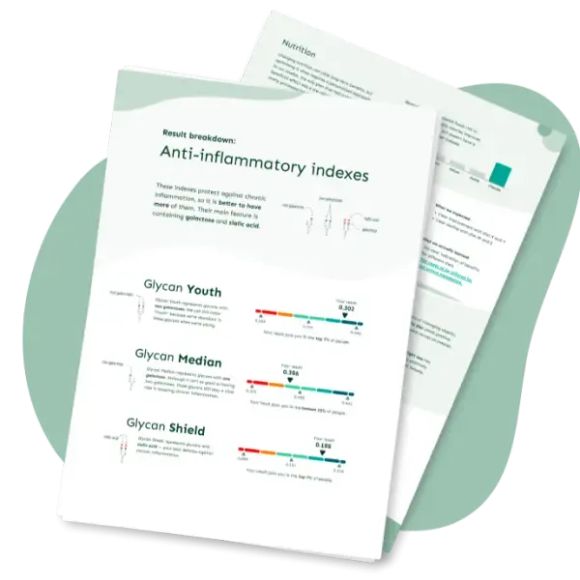
GlycanAge

GlycanAge is a biological age test that helps individuals discover, measure, and optimize their biological age. By analyzing chronic inflammation, the test provides insights into how lifestyle choices affect aging. The company is based on over 30 years of scientific research, with over 200,000 tests performed. GlycanAge offers a simple at-home process, including a blood sample collection kit, lab analysis, and expert consultation to help users improve their health and longevity.
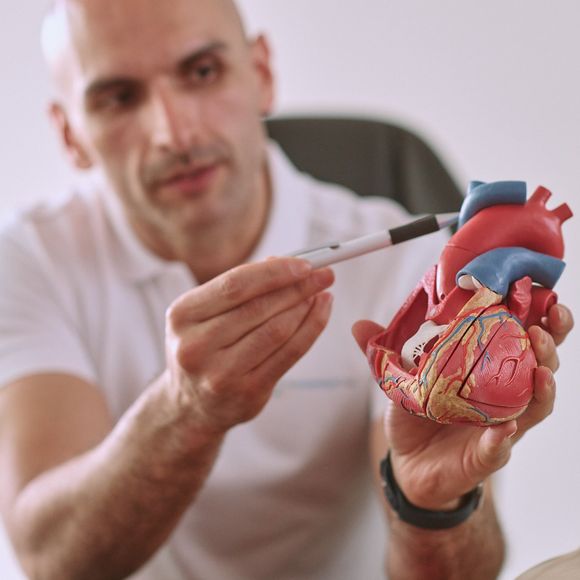
PreventicsOne
PreventicsOne offers comprehensive preventive, cardiology, and sports medicine services to ensure optimal health.
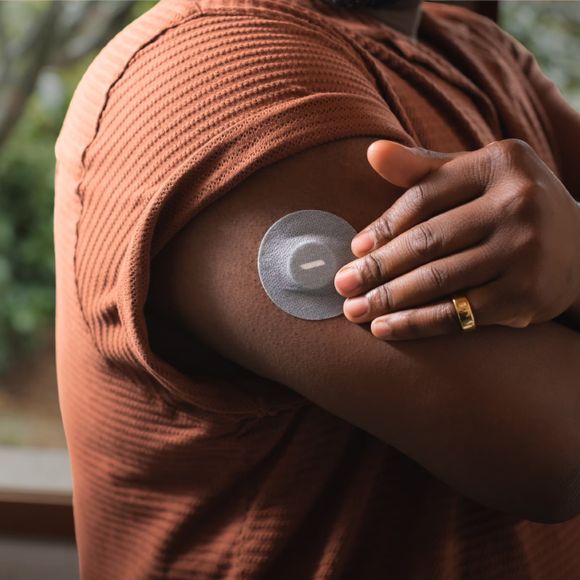
Veri
Veri offers a personalized metabolic health program using cutting-edge CGM technology. Their program helps users find the right foods, achieve health goals, and maintain stable blood sugar levels through continuous glucose monitoring and personalized guidance.
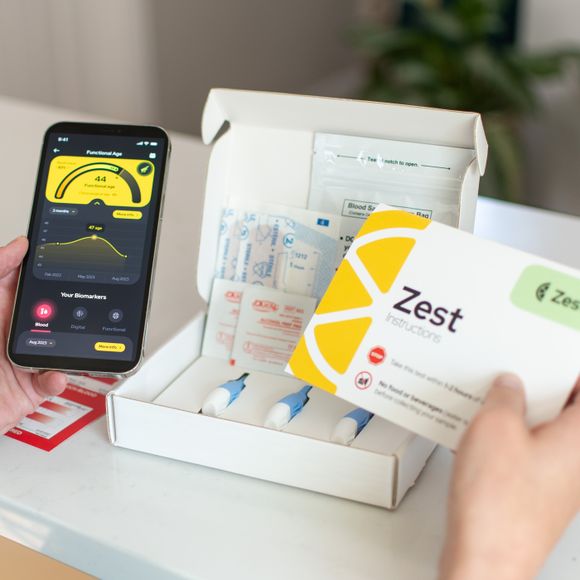
Zest Science
Zest Science offers science-backed supplements and longevity blood panels to help you live a longer, healthier life.
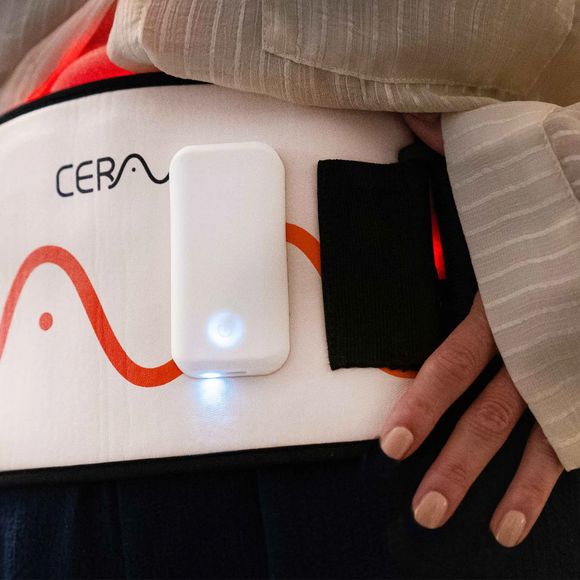
CeraThrive
CeraThrive offers the first FDA-listed Red Light Therapy device designed to support the Gut-Brain Axis.

Aeon
Aeon offers comprehensive health checks with a 60-minute full-body MRI and blood analysis for early detection.

Dr. Kirkamm
Dr. Kirkamm provides specialized medical diagnostics and services, including tests for heart attack and stroke prevention, blood tuning, and diagnostics for irritable bowel syndrome (SIBO) and other gastrointestinal issues.

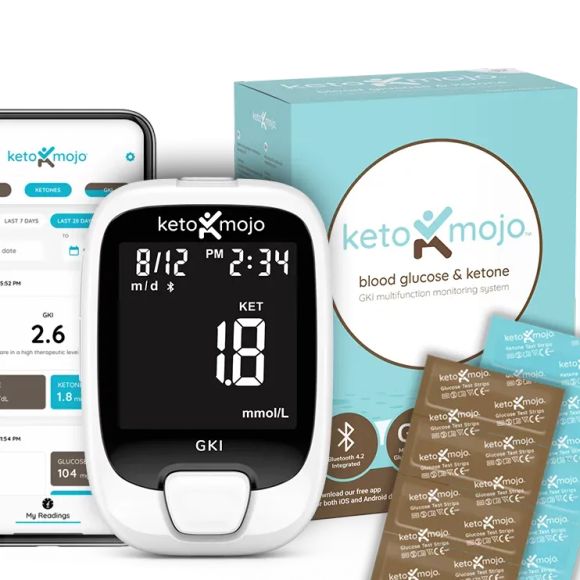
Keto-Mojo
Keto-Mojo provides tools and resources to support individuals on a ketogenic or low-carb lifestyle.

Epigee
Epigee offers at-home epigenetic testing to determine your biological age, providing personalized reports with recommendations to enhance health and longevity.