Knowledge
Magazine
-

The 24-Hour Sleep Model: Why Better Sleep Starts the Morning Before
8 min read
-

Eating for Longevity: Lessons From the World's Oldest People
9 min read
-

The Summer Health Kit: Supplies and Gadgets for Hot Days and Warm Nights
9 min read
Weekly picks on longevity, brands, and health science. No spam—unsubscribe anytime.
Tools
- →The 30s Longevity Guide for Women
- →Postpartum Recovery Guide
- →Perimenopause Longevity Guide
- →Dopamine Reset Guide
- →Pregnancy Longevity Guide
- →Peptide Guide
- →Home Detox Guide
- →Slow Aging Guide
- →Pro Supplement Guide
- →Safe Supplement Guide
- →Bio Age Calculator
- →Blood Testing Guide
- →Deep Sleep Guide
- →Pro Longevity Dashboard
By Category
By Goal
Knowledge
- →What is Longevity?
- →Improve diet
- →More focus
- →Look younger
- →Lose weight
- →Track biomarkers
- →Improve sleep
- →Build muscle
- →Increase cardio
- →Detect diseases
- →Recover faster
- →Relieve stress
Magazine
-
The 24-Hour Sleep Model: Why Better Sleep Starts the Morning Before
8 min read
-
Eating for Longevity: Lessons From the World's Oldest People
9 min read
-
The Summer Health Kit: Supplies and Gadgets for Hot Days and Warm Nights
9 min read
Weekly picks on longevity, brands, and health science. No spam—unsubscribe anytime.
Brands
- →Apps
- →At Home Tests & Kits
- →Events
- →Experts & Clinics
- →Foods & Beverages
- →Gadgets & Equipment
- →Gyms & Workouts
- →Supplements
- →Travel & Retreats
- →Wearables & Trackers
Tools
- →The 30s Longevity Guide for Women
- →Postpartum Recovery Guide
- →Perimenopause Longevity Guide
- →Dopamine Reset Guide
- →Pregnancy Longevity Guide
- →Peptide Guide
- →Home Detox Guide
- →Slow Aging Guide
- →Pro Supplement Guide
- →Safe Supplement Guide
- →Bio Age Calculator
- →Blood Testing Guide
- →Deep Sleep Guide
- →Pro Longevity Dashboard

Discover
Connect
Longevity Knowledge BETA
Recover faster
Accelerate your recovery from training and stress with science-backed protocols spanning cold therapy, sauna, nutrition, and nervous system regulation.
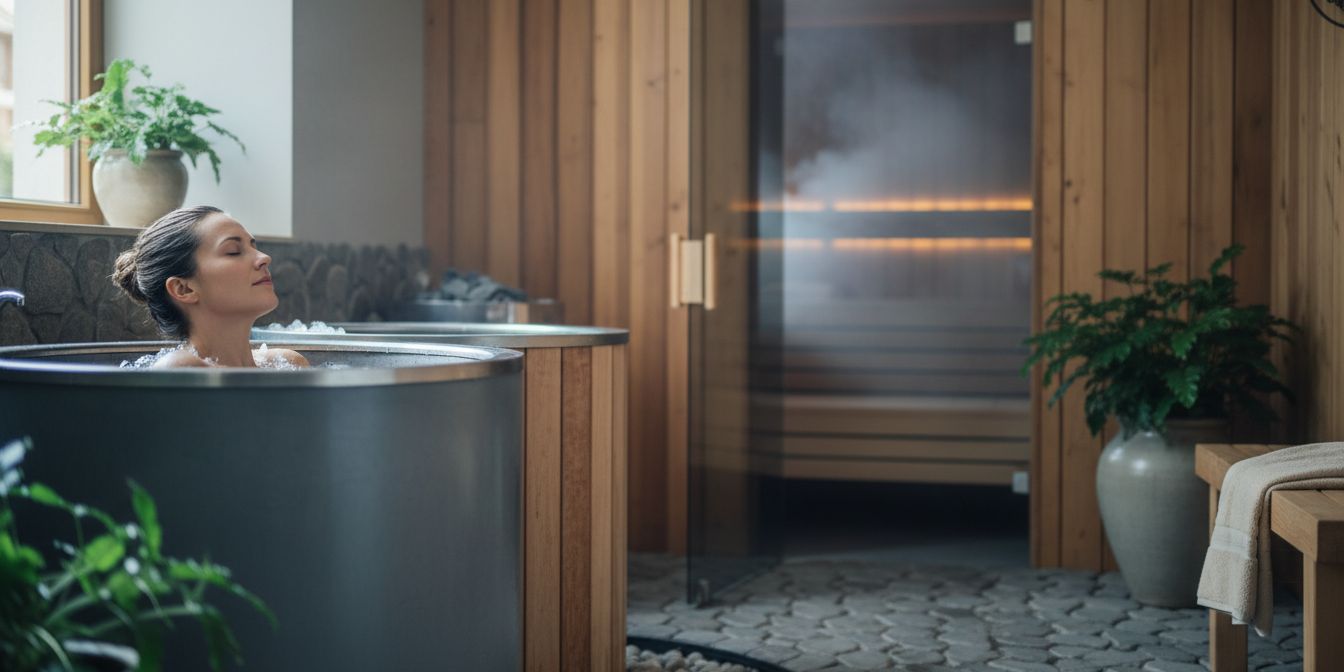
Table of Contents
Why recovery matters more than most people think
Training tears muscle fibers, depletes glycogen, and drives up cortisol. That's the easy part. The hard part is what comes after: rebuilding those fibers thicker, restoring fuel stores, and returning the nervous system to baseline. This process, called supercompensation, is where actual performance gains happen. Skip it or rush it, and you don't just stall progress. You move backward. Accumulated training stress without adequate recovery leads to overreaching, chronic fatigue, elevated injury risk, and eventually full-blown overtraining syndrome. An umbrella review of recovery strategies in endurance athletes found that the most effective athletes treat recovery with the same structure and discipline as their training sessions [1].
Cold and heat: two sides of the same coin
Cold water immersion at 10-15°C for 2-5 minutes triggers a sharp sympathetic nervous system response. Plasma norepinephrine rises 200-530% depending on temperature and duration, driving vasoconstriction that reduces swelling and blunts pain signaling [2]. But there's a catch: that same anti-inflammatory effect can dampen the signaling muscles need to adapt after strength training. A 2024 meta-analysis found that regular post-exercise cold water immersion may blunt hypertrophy over time [3]. The practical takeaway: use cold plunges on rest days or at least 4 hours after lifting.
Sauna bathing works the opposite direction. Sessions at 80-100°C for 15-20 minutes activate heat shock proteins that repair damaged cellular proteins and boost growth hormone acutely by 200-300%. The landmark Finnish cohort study following 2,315 men for over 20 years found that those who used the sauna 4-7 times per week had a 40% lower risk of all-cause mortality and 50% lower cardiovascular mortality compared to once-per-week users [4]. Combining heat and cold in contrast therapy enhances circulation and accelerates metabolic waste clearance.
Sleep is where recovery actually happens
During slow-wave sleep, the pituitary gland releases the bulk of daily growth hormone, blood flow to muscles increases roughly 40%, and tissue repair ramps up [5]. Sleep debt does the opposite: it increases protein degradation pathways and suppresses muscle protein synthesis, effectively putting your body into a catabolic state [6]. No amount of cold plunging, compression boots, or supplements can compensate for chronically poor sleep. Aim for 7-9 hours, keep a consistent schedule, and monitor how sleep quality correlates with your HRV trends.
Active recovery and mobility
Complete rest is rarely the fastest path back. Light movement on off days, such as walking, easy cycling, or swimming at zone 1 intensity, increases blood flow to damaged tissues without adding training load. This accelerated perfusion delivers amino acids and oxygen while clearing metabolic byproducts like lactate and hydrogen ions more efficiently than sitting on the couch. A systematic review confirmed that active recovery produces small but consistent improvements in next-day performance and reduction in delayed-onset muscle soreness [1]. Dedicated mobility work targeting hips, thoracic spine, shoulders, and ankles also prevents the stiffness that accumulates with high-intensity training.
Nutrition for faster recovery
The post-exercise window isn't as narrow as the supplement industry once claimed, but consuming 30-40g of protein with carbohydrates within about 2 hours after training does accelerate glycogen resynthesis and muscle protein synthesis. Beyond the basics, a few nutritional strategies have solid evidence behind them:
- Tart cherry juice concentrate contains anthocyanins that improve muscular function recovery and reduce IL-6 levels after strenuous exercise [7]
- Omega-3 fatty acids at 2-3g EPA/DHA daily help resolve exercise-induced inflammation more efficiently
- Collagen peptides (15g with vitamin C, taken 30-60 minutes before training) support tendon and connective tissue remodeling
- Creatine monohydrate (3-5g daily) supports cellular energy and repair across all tissues
- Adequate electrolytes, particularly sodium, potassium, and magnesium, replace what's lost through sweat
Monitoring readiness with HRV
Recovery isn't something you can feel with perfect accuracy. Heart rate variability (HRV), measured each morning, gives an objective read on autonomic nervous system balance. When HRV drops below your personal baseline for 2 or more consecutive days, it signals accumulated stress and a need for lighter training or extra rest. Techniques to restore parasympathetic tone include extended-exhale breathing (inhale 4 seconds, exhale 6-8 seconds), meditation, and consistent sleep timing. Tracking HRV trends over weeks, rather than obsessing over daily numbers, provides the clearest picture of whether your training-to-recovery ratio is on track [8].
Recovery gets slower with age
A 2024 review found that recovery timelines shift meaningfully as we get older. Where a 25-year-old might bounce back from heavy resistance training in 48 hours, someone in their 50s or 60s may need 4-7 days for the same stimulus [9]. Chronic low-grade inflammation, changes in extracellular matrix composition, and declining hormone levels all contribute. This doesn't mean training less, but it does mean programming smarter: longer deload cycles, more emphasis on sleep and nutrition, and honest monitoring of readiness markers like HRV and resting heart rate.
References
- 1. Effectiveness of recovery strategies after training and competition in endurance athletes: an umbrella review
- 2. Human physiological responses to immersion into water of different temperatures
- 3. Throwing cold water on muscle growth: a systematic review with meta-analysis of the effects of postexercise cold water immersion on resistance trainin...
- 4. Association between sauna bathing and fatal cardiovascular and all-cause mortality events (Laukkanen et al., JAMA Internal Medicine 2015)
- 5. Sleep and muscle recovery: endocrinological and molecular basis for a new and promising hypothesis
- 6. Physiology of growth hormone secretion during sleep
- 7. Tart cherry supplementation and recovery from strenuous exercise: a systematic review and meta-analysis
- 8. Heart rate variability applications in strength and conditioning: a narrative review
- 9. Age-associated differences in recovery from exercise-induced muscle damage
Compression garments after training
Time your cold exposure right
Program deload weeks every 4-6 weeks
Red light therapy timing
Sauna protocol for recovery
Cold plunge benefits
Sleep is the ultimate recovery tool
Monitor inflammation for overtraining
How long does muscle recovery take after a workout?
Is active recovery better than complete rest?
Does recovery slow down as you age?
How does red light therapy work?
What are the proven benefits of sauna use?
Should I do cold plunges after every workout?
How do I know if I'm recovered enough to train?
What supplements help with recovery?

Most Replayed Moment: Are You Really Gluten Intolerant? It Could Be This Instead!

Raising a Dog & Mastering Calm Assertive Energy | Cesar Millan

Building strength and muscle mass: how to optimize training, nutrition, and more for longevity (AMA #71 rebroadcast)
Anti-Aging Expert: This Reverses Gray Hair & Boosts Your Energy!
Women’s Fitness Expert: What You NEED To Know About Dieting & Exercise | Dr. Stephanie Estima
#398 ‒ AMA #86: GLP-1 RAs and muscle loss: new data, better questions, and how to preserve muscle during weight loss
No discussions yet
Be the first to start a discussion about Recover faster.
Related Topics
Related Articles

Move Better, Not Just More: Smart Strength, Cardio, and Recovery for Lifelong Fitness
5 min read
Living Lighter with Every Breath – How Breathwork Helps Me Release Blockages and See More Clearly
5 min read
The Link Between Processed Foods and Chronic Inflammation: Why Whole Foods Matter More Than Ever
5 min read