Knowledge
Magazine
-

The 24-Hour Sleep Model: Why Better Sleep Starts the Morning Before
8 min read
-

Eating for Longevity: Lessons From the World's Oldest People
9 min read
-

The Summer Health Kit: Supplies and Gadgets for Hot Days and Warm Nights
9 min read
Weekly picks on longevity, brands, and health science. No spam—unsubscribe anytime.
Tools
- →The 30s Longevity Guide for Women
- →Postpartum Recovery Guide
- →Perimenopause Longevity Guide
- →Dopamine Reset Guide
- →Pregnancy Longevity Guide
- →Peptide Guide
- →Home Detox Guide
- →Slow Aging Guide
- →Pro Supplement Guide
- →Safe Supplement Guide
- →Bio Age Calculator
- →Blood Testing Guide
- →Deep Sleep Guide
- →Pro Longevity Dashboard
By Category
By Goal
Knowledge
- →What is Longevity?
- →Improve diet
- →More focus
- →Look younger
- →Lose weight
- →Track biomarkers
- →Improve sleep
- →Build muscle
- →Increase cardio
- →Detect diseases
- →Recover faster
- →Relieve stress
Magazine
-
The 24-Hour Sleep Model: Why Better Sleep Starts the Morning Before
8 min read
-
Eating for Longevity: Lessons From the World's Oldest People
9 min read
-
The Summer Health Kit: Supplies and Gadgets for Hot Days and Warm Nights
9 min read
Weekly picks on longevity, brands, and health science. No spam—unsubscribe anytime.
Brands
- →Apps
- →At Home Tests & Kits
- →Events
- →Experts & Clinics
- →Foods & Beverages
- →Gadgets & Equipment
- →Gyms & Workouts
- →Supplements
- →Travel & Retreats
- →Wearables & Trackers
Tools
- →The 30s Longevity Guide for Women
- →Postpartum Recovery Guide
- →Perimenopause Longevity Guide
- →Dopamine Reset Guide
- →Pregnancy Longevity Guide
- →Peptide Guide
- →Home Detox Guide
- →Slow Aging Guide
- →Pro Supplement Guide
- →Safe Supplement Guide
- →Bio Age Calculator
- →Blood Testing Guide
- →Deep Sleep Guide
- →Pro Longevity Dashboard

Discover
Connect
Longevity Knowledge BETA
Meditation
Table of Contents
How meditation changes the brain
Meditation has moved from fringe practice to one of the most studied interventions in neuroscience. MRI research shows that consistent meditation produces structural brain changes: increased cortical thickness in the prefrontal cortex and anterior cingulate cortex, growth of hippocampal gray matter, and reduced amygdala volume [1][2]. These changes appear after as few as 8 weeks of regular practice, and they correlate directly with improvements in attention, emotional regulation, and stress resilience.
At a functional level, meditation changes how the default mode network operates. This is the brain network responsible for mind-wandering and self-referential thought. Experienced meditators show lower default mode activity and stronger connectivity between attention and default mode networks, which translates to less rumination and greater present-moment awareness [2].
Meditation and stress: what the data shows
Chronic stress drives the HPA axis to overproduce cortisol, promoting inflammation, immune suppression, and accelerated cellular aging. Meditation directly counters this. A 2020 meta-analysis found that meditation interventions reduce cortisol with a moderate effect size (g = 0.41), with the strongest effects in at-risk populations [3]. Regular practitioners show cortisol reductions of 10-25%, along with lower levels of inflammatory markers IL-6 and CRP [4].
Beyond cortisol, meditation improves heart rate variability (HRV), a key marker of autonomic resilience and a predictor of cardiovascular health. Higher HRV indicates better parasympathetic tone and greater capacity to recover from stress.
Longevity and cellular aging
One of the most compelling findings links meditation to telomere biology. Telomeres, the protective caps on chromosomes, shorten with age and chronic stress. A Harvard-affiliated study found that meditation practice is associated with increased telomerase activity, the enzyme that maintains telomere length [5]. Loving-kindness meditation practitioners showed significantly longer telomeres than controls, even after adjusting for BMI and depression history [6]. However, an 18-month randomized controlled trial in older adults found no significant effect on telomere length, suggesting that the relationship between meditation and cellular aging depends on practice type, duration, and individual factors [7].
Core techniques and how they differ
- Focused attention -- concentration on a single anchor such as the breath, a mantra, or a visual point. This is the recommended starting practice and strengthens sustained attention.
- Open monitoring (mindfulness) -- non-judgmental awareness of all arising thoughts, sensations, and emotions without attachment. Builds metacognitive awareness and is the most researched form.
- Loving-kindness (metta) -- directed cultivation of compassion toward self and others. Linked to increased positive affect, reduced social anxiety, and longer telomeres.
- Body scan -- systematic attention through different body regions. Effective for reducing somatic tension and improving interoceptive awareness.
- Non-sleep deep rest (NSDR/Yoga Nidra) -- guided relaxation protocols that lower cortisol, boost dopamine, and accelerate learning consolidation.
How to build a consistent practice
The most important factor isn't which technique you choose or how long each session lasts. It's consistency. Research suggests 10-20 minutes daily delivers substantial benefits, though even 5-minute sessions produce measurable stress reduction. Morning practice tends to stick better because there are fewer competing demands, and it aligns with natural cortisol rhythms. For neural benefits like increased cortical thickness, aim for daily practice over 4-8 weeks [1].
Apps and guided recordings can help beginners build the habit. A 2025 Carnegie Mellon study found that meditation apps deliver real, measurable health benefits including lower blood pressure, reduced repetitive negative thinking, and changes in gene expression related to inflammation [8]. Start with guided sessions if sitting in silence feels uncomfortable. The key is regularity over duration.
References
- 1. Mindfulness practice leads to increases in regional brain gray matter density (Holzel et al., 2011)
- 2. Neurobiological Changes Induced by Mindfulness and Meditation: A Systematic Review (2024)
- 3. Meditation interventions efficiently reduce cortisol levels of at-risk samples: a meta-analysis (Pascoe et al., 2020)
- 4. Meditation and Its Mental and Physical Health Benefits in 2023 (Lau et al.)
- 5. Can meditation slow rate of cellular aging? Cognitive stress, mindfulness, and telomeres (Epel et al., 2009)
- 6. Loving-Kindness Meditation practice associated with longer telomeres in women (Hoge et al., 2013)
- 7. Effect of an 18-Month Meditation Training on Telomeres in Older Adults (Age-Well RCT, 2024)
- 8. Meditation Apps Deliver Real Health Benefits (Carnegie Mellon University, 2025)
Start with 10 minutes of focused breathing
Meditate in the morning for better consistency
Try loving-kindness meditation for emotional resilience
Use a meditation app if silence feels difficult
Combine meditation with slow breathing for stronger effects
Meditation minimum effective dose
How many minutes of meditation per day are enough?
What is the difference between meditation and mindfulness?
Is meditation safe for everyone?
How long does it take for meditation to change the brain?
Can meditation actually slow aging?
How long do I need to meditate to see benefits?

Essentials: The Science & Treatment of Obsessive Compulsive Disorder (OCD)
Movement Practice to Strengthen Your Mind-Body Connection | Ido Portal
How to Better Regulate Your Emotions | Dr. Marc Brackett
Essentials: Understand & Improve Memory Using Science-Based Tools
Cultivating Awe & Emotional Connection in Daily Life | Dr. Dacher Keltner
Science-Based Meditation Tools to Improve Your Brain & Health | Dr. Richard Davidson
No discussions yet
Be the first to start a discussion about Meditation.
Related Articles


Community Discussions
Related Brands
Open

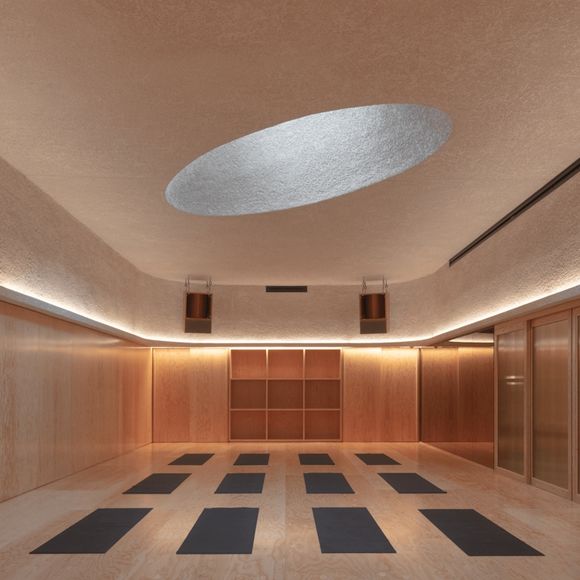
Open offers a digital platform for guided meditation, mindfulness, and breathwork practices. Their sessions are designed to help individuals enhance mental well-being, reduce stress, and improve overall quality of life through accessible and engaging content.
Insight Timer
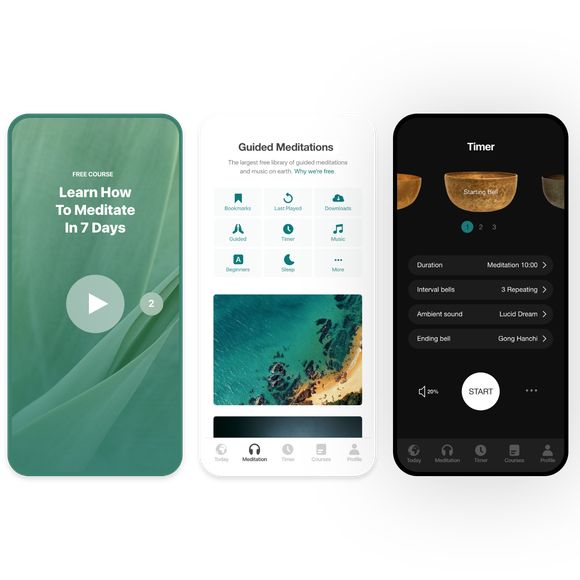
Insight Timer is a free meditation app offering the world’s largest library of guided meditations, music tracks, and ambient sounds to aid in sleep, relaxation, and mindfulness. With contributions from over 17,000 teachers, the app provides diverse content suitable for both beginners and experienced practitioners.

Calm

Calm offers a top-rated app for meditation and sleep, providing personalized content to manage stress and anxiety, improve sleep, and promote mindfulness.
Waking Up
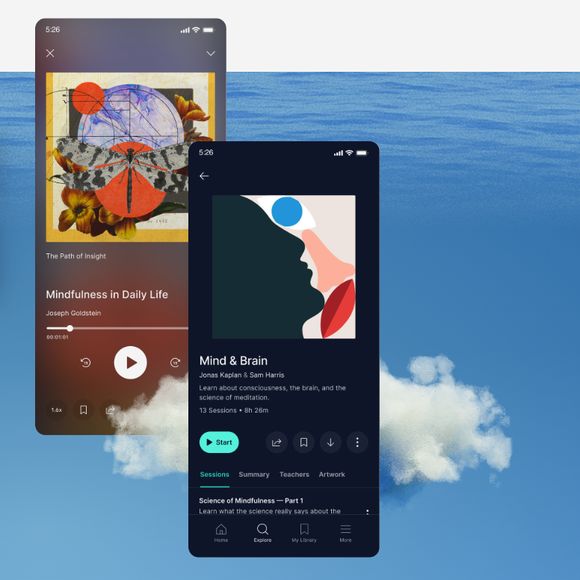
Waking Up is a comprehensive meditation and mindfulness app created by neuroscientist and author Sam Harris. It offers guided meditations, lessons on mindfulness theory, and conversations with experts to help users gain a deeper understanding of their minds and live more examined lives.

Headspace
Headspace is a meditation and mindfulness app designed to help users reduce stress, improve focus, and sleep better. With guided meditations, expert-led courses, and a variety of tools, Headspace makes it easy to take care of your mental health.

Muse

Muse offers EEG-powered meditation and sleep headbands that help users train their brains, find focus, and improve sleep through advanced biofeedback technology.

NeuroVizr
NeuroVizr offers a wearable device designed to enhance cognitive performance, improve sleep, relieve anxiety, and support lucid meditation through advanced neuromodulation technology.

Komuso Design
Komuso Design offers The Shift, a mindful breathing necklace designed to help reduce stress, lower blood pressure, and improve sleep by extending exhalation. The Shift is a simple, effective tool for managing anxiety and promoting relaxation, making it easy to incorporate mindful breathing into daily life.
Pillow
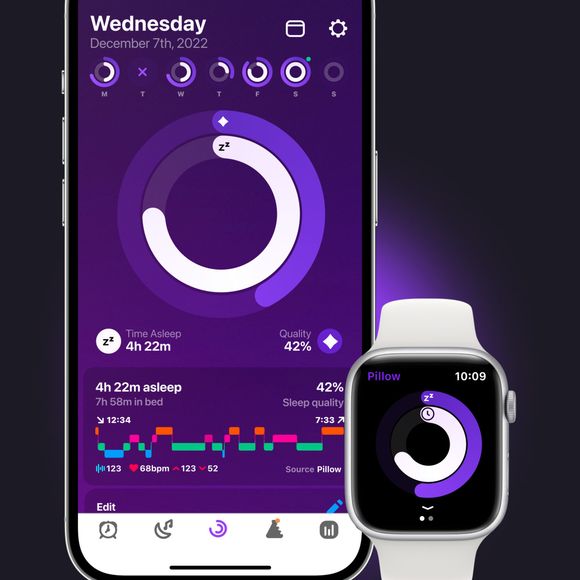
Pillow provides an advanced sleep tracking app that helps individuals monitor and improve their sleep quality using their Apple Watch, iPhone, or iPad.
Ten Percent Happier
Ten Percent Happier is a meditation and mindfulness platform designed to help individuals find happiness by integrating meditation practices into their everyday lives. The platform offers a variety of guided meditations, courses, and resources to help users develop mindfulness skills and apply them to real-life situations.