Knowledge
Magazine
-

The 24-Hour Sleep Model: Why Better Sleep Starts the Morning Before
8 min read
-

Eating for Longevity: Lessons From the World's Oldest People
9 min read
-

The Summer Health Kit: Supplies and Gadgets for Hot Days and Warm Nights
9 min read
Weekly picks on longevity, brands, and health science. No spam—unsubscribe anytime.
Tools
- →The 30s Longevity Guide for Women
- →Postpartum Recovery Guide
- →Perimenopause Longevity Guide
- →Dopamine Reset Guide
- →Pregnancy Longevity Guide
- →Peptide Guide
- →Home Detox Guide
- →Slow Aging Guide
- →Pro Supplement Guide
- →Safe Supplement Guide
- →Bio Age Calculator
- →Blood Testing Guide
- →Deep Sleep Guide
- →Pro Longevity Dashboard
By Category
By Goal
Knowledge
- →What is Longevity?
- →Improve diet
- →More focus
- →Look younger
- →Lose weight
- →Track biomarkers
- →Improve sleep
- →Build muscle
- →Increase cardio
- →Detect diseases
- →Recover faster
- →Relieve stress
Magazine
-
The 24-Hour Sleep Model: Why Better Sleep Starts the Morning Before
8 min read
-
Eating for Longevity: Lessons From the World's Oldest People
9 min read
-
The Summer Health Kit: Supplies and Gadgets for Hot Days and Warm Nights
9 min read
Weekly picks on longevity, brands, and health science. No spam—unsubscribe anytime.
Brands
- →Apps
- →At Home Tests & Kits
- →Events
- →Experts & Clinics
- →Foods & Beverages
- →Gadgets & Equipment
- →Gyms & Workouts
- →Supplements
- →Travel & Retreats
- →Wearables & Trackers
Tools
- →The 30s Longevity Guide for Women
- →Postpartum Recovery Guide
- →Perimenopause Longevity Guide
- →Dopamine Reset Guide
- →Pregnancy Longevity Guide
- →Peptide Guide
- →Home Detox Guide
- →Slow Aging Guide
- →Pro Supplement Guide
- →Safe Supplement Guide
- →Bio Age Calculator
- →Blood Testing Guide
- →Deep Sleep Guide
- →Pro Longevity Dashboard

Discover
Connect
Longevity Knowledge BETA
Functional Training
Table of Contents
What Is Functional Training?
Functional training prepares your body for real-world movements and daily activities. Unlike isolation exercises that target single muscles, functional training works multiple muscle groups together in patterns that mirror how you actually move—bending, lifting, reaching, and rotating. This approach builds strength that transfers directly to everyday life and sports performance [1].
Core Movement Patterns
Functional training focuses on six fundamental movement patterns that form the foundation of human movement:
The Six Essential Patterns
Squat: Lowering your hips with knees bent, like sitting in a chair or picking something up from the floor.
Hinge: Bending at the hips while keeping a neutral spine—essential for lifting objects safely.
Push: Moving weight away from your body, including horizontal pushes (push-ups) and vertical pushes (overhead press).
Pull: Drawing weight toward your body, such as rows and pull-ups.
Rotate: Twisting movements that engage your core—critical for sports and daily activities like reaching across your body.
Carry: Moving while holding weight, like carrying groceries or a suitcase.
Core Stability and Real-World Strength
Core stability in functional training means more than visible abs. It refers to your body's ability to maintain proper alignment and transfer force between upper and lower body. A stable core protects your spine during lifting and allows efficient power transfer in athletic movements. Functional core exercises like planks, farmer's carries, and Pallof presses train the deep muscles that support your spine during daily activities [2].
Mobility and Movement Quality
Functional training emphasizes moving well, not just moving weight. Mobility work ensures your joints can move through their full range of motion. Poor mobility forces compensation patterns that lead to injury. Before adding load, functional training programs often assess movement quality using screens like the Functional Movement Screen (FMS) to identify limitations and asymmetries [3].
Benefits for Longevity
As we age, functional fitness determines independence more than maximal strength. The ability to get up from the floor, carry groceries, and maintain balance prevents falls and preserves quality of life. Research shows functional training improves balance, reduces fall risk in older adults, and maintains movement capacity across the lifespan [1].
References
Master bodyweight first
Train in multiple planes
Include single-leg work
Add carries to every workout
Screen before loading
What are the six functional movement patterns?
How is functional training different from traditional weightlifting?
Can beginners do functional training?
How often should I do functional training?

How to Make Yourself Unbreakable | DJ Shipley
No discussions yet
Be the first to start a discussion about Functional Training.
Related Articles

Related Brands
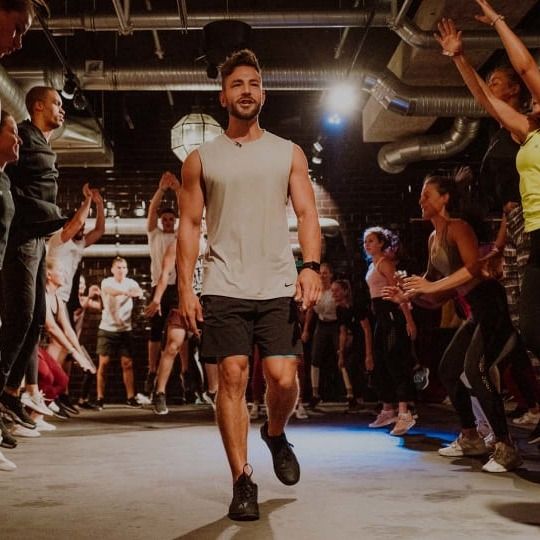
John Reed

JOHN REED Fitness combines diverse training options, vibrant design, and dynamic music to create an engaging workout environment, offering facilities worldwide, including a club in Essen, Germany.
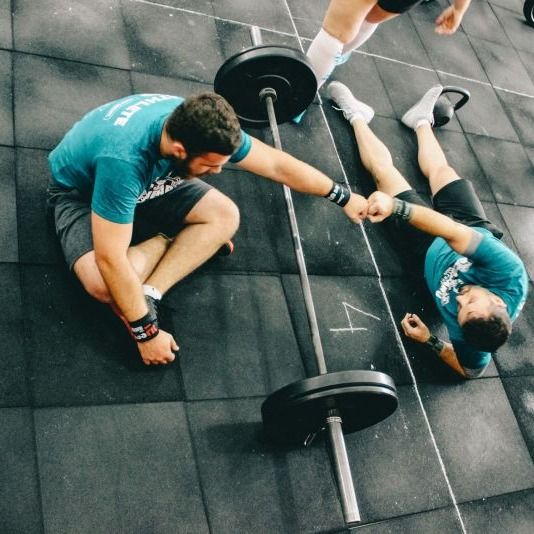
Perform Better

Perform Better Europe offers a wide range of functional training equipment and solutions, including products for strength, endurance, mobility, and recovery.

Tubuh Club
TUBUH CLUB is a holistic health club in Düsseldorf offering functional training, whole-body cryotherapy, physiotherapy, massages, medical check-ups, and infusions, tailored to individual needs for comprehensive body and mind wellness.
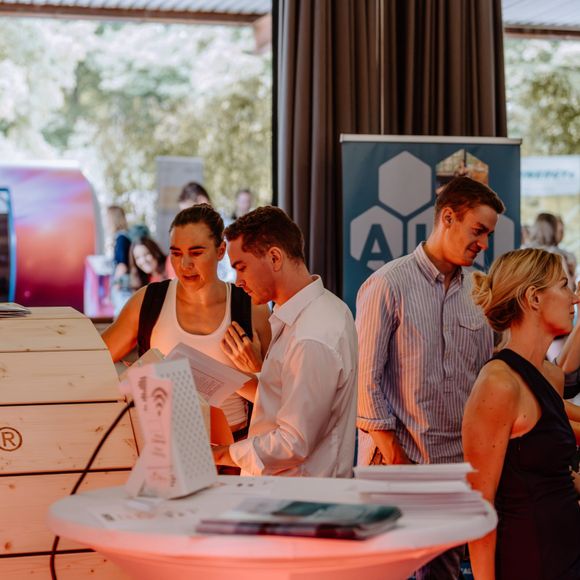
Flow Fest
FlowFest is Germany's premier biohacking event, offering immersive experiences, expert-led workshops, and community engagement to optimize health and performance.