Knowledge
Magazine
-

The 24-Hour Sleep Model: Why Better Sleep Starts the Morning Before
8 min read
-

Eating for Longevity: Lessons From the World's Oldest People
9 min read
-

The Summer Health Kit: Supplies and Gadgets for Hot Days and Warm Nights
9 min read
Weekly picks on longevity, brands, and health science. No spam—unsubscribe anytime.
Tools
- →The 30s Longevity Guide for Women
- →Postpartum Recovery Guide
- →Perimenopause Longevity Guide
- →Dopamine Reset Guide
- →Pregnancy Longevity Guide
- →Peptide Guide
- →Home Detox Guide
- →Slow Aging Guide
- →Pro Supplement Guide
- →Safe Supplement Guide
- →Bio Age Calculator
- →Blood Testing Guide
- →Deep Sleep Guide
- →Pro Longevity Dashboard
By Category
By Goal
Knowledge
- →What is Longevity?
- →Improve diet
- →More focus
- →Look younger
- →Lose weight
- →Track biomarkers
- →Improve sleep
- →Build muscle
- →Increase cardio
- →Detect diseases
- →Recover faster
- →Relieve stress
Magazine
-
The 24-Hour Sleep Model: Why Better Sleep Starts the Morning Before
8 min read
-
Eating for Longevity: Lessons From the World's Oldest People
9 min read
-
The Summer Health Kit: Supplies and Gadgets for Hot Days and Warm Nights
9 min read
Weekly picks on longevity, brands, and health science. No spam—unsubscribe anytime.
Brands
- →Apps
- →At Home Tests & Kits
- →Events
- →Experts & Clinics
- →Foods & Beverages
- →Gadgets & Equipment
- →Gyms & Workouts
- →Supplements
- →Travel & Retreats
- →Wearables & Trackers
Tools
- →The 30s Longevity Guide for Women
- →Postpartum Recovery Guide
- →Perimenopause Longevity Guide
- →Dopamine Reset Guide
- →Pregnancy Longevity Guide
- →Peptide Guide
- →Home Detox Guide
- →Slow Aging Guide
- →Pro Supplement Guide
- →Safe Supplement Guide
- →Bio Age Calculator
- →Blood Testing Guide
- →Deep Sleep Guide
- →Pro Longevity Dashboard

Discover
Connect
Longevity Knowledge BETA
DNA Repair
Table of Contents
Why DNA repair matters for longevity
Your DNA suffers damage tens of thousands of times per day. UV radiation, environmental chemicals, and metabolic byproducts constantly assault your genetic code. Without efficient repair mechanisms, this damage accumulates, leading to mutations, cellular dysfunction, and eventually cancer or accelerated aging [1]. Research has established that DNA damage causally contributes to aging and age-related diseases [2].
The connection between DNA repair and longevity is direct. People with inherited defects in DNA repair genes often develop premature aging syndromes. Studies on long-lived animals like naked mole-rats reveal they possess enhanced DNA repair capacity that helps them live up to 30 years, remarkable for a rodent of their size [3]. Conversely, accumulating evidence suggests that loss of genomic maintenance contributes to normal aging [4].
Major DNA repair pathways
Your cells deploy several specialized repair systems depending on the type of damage. Base excision repair handles small lesions like oxidized bases caused by oxidative stress, fixing about 20,000 such lesions daily [5]. Nucleotide excision repair removes bulky lesions including UV-induced thymine dimers, while mismatch repair corrects replication errors that escape proofreading [6].
Double-strand breaks pose the greatest threat to genome stability. These severe lesions trigger two main repair pathways: homologous recombination, which uses an undamaged sister chromosome as a template for precise repair, and non-homologous end joining, which rapidly fuses broken ends but can be error-prone [7]. Double-strand breaks become more frequent with age and defects in their repair accelerate aging [8].
How DNA repair declines with age
DNA repair capacity decreases as you get older. This decline stems from reduced expression of repair enzymes, decreased NAD+ levels needed for repair processes, and accumulated cellular stress. Research shows that repair efficiency drops significantly in aging cells, leading to mutation accumulation and genomic instability [9].
The consequences extend beyond cancer risk. Mitochondrial DNA repair mechanisms also deteriorate with age, contributing to mitochondrial dysfunction and reduced cellular energy production [10]. This creates a vicious cycle: impaired repair leads to more damage, which further reduces repair capacity. Understanding these mechanisms has led to interventions targeting DNA repair enhancement as a longevity strategy.
Supporting your DNA repair systems
Several evidence-based approaches can support DNA repair function. Regular exercise upregulates DNA repair enzyme expression and reduces oxidative stress. Adequate intake of nutrients like zinc, magnesium, and B vitamins provides cofactors required for repair enzymes [11]. NAD+ precursors such as NMN and NR may enhance repair capacity by fueling enzymes like PARPs that consume NAD+ to fix DNA damage [12].
Caloric restriction and intermittent fasting activate cellular stress responses that enhance DNA repair and maintenance pathways. These interventions reduce oxidative damage while upregulating repair mechanisms through sirtuin activation [13]. Sleep quality matters too, as DNA repair processes peak during deep sleep when cellular energy can be directed toward maintenance rather than activity.
References
- 1. DNA damage, DNA repair, aging, and neurodegeneration (Maynard et al., Cold Spring Harb Perspect Med, 2015)
- 2. Genome instability and DNA repair in somatic and reproductive aging (Panier et al., Annu Rev Pathol, 2024)
- 3. A cGAS-mediated mechanism in naked mole-rats potentiates DNA repair and delays aging (Chen et al., Science, 2025)
- 4. DNA repair, genome stability, and aging (Lombard et al., Cell, 2005)
- 5. Base excision repair of oxidative DNA damage (Dianov et al., Prog Nucleic Acid Res Mol Biol, 2001)
- 6. Nucleotide excision repair and related diseases (Menoni et al., Genome Instab Dis, 2020)
- 7. DNA double strand break repair, aging and the chromatin connection (Gorbunova & Seluanov, Mutat Res, 2016)
- 8. Fight to the bitter end: DNA repair and aging (Chen et al., Ageing Res Rev, 2020)
- 9. DNA repair in aging rat neurons (Rao, Neuroscience, 2007)
- 10. Mitochondrial DNA repair and association with aging (Gredilla et al., Exp Gerontol, 2010)
- 11. Zinc in DNA repair and cancer prevention (Sliwinski et al., J Nutr Biochem, 2009)
- 12. NAD+ metabolism and the control of energy homeostasis (Cantó et al., Cell Metab, 2015)
- 13. Importance of circadian timing for aging and longevity (Acosta-Rodríguez et al., Nat Commun, 2021)
Educate yourself
Consult professionals
Track your progress
Eat colorful antioxidants
Prioritize deep sleep
Exercise regularly
Consider NAD+ Precursors
Maintain circadian rhythms
Practice Intermittent Fasting
How do I optimize this?
What causes DNA damage in the body?
How does DNA repair decline with age?
Can DNA repair be enhanced naturally?
What is the link between DNA repair and cancer?
Do NAD+ supplements actually help with DNA repair?
What is this?
Why does this matter?

Essentials: Benefits of Sauna & Deliberate Heat Exposure

#109 How To Boost NAD Levels To Fight Inflammation, Improve Recovery, and Slow Aging | Dr. Charles Brenner
Supplements for Longevity & Their Efficacy | Dr. Peter Attia
#087 The Science of Magnesium and Its Role in Aging and Disease | Dr. Rhonda Patrick
#086 How Micronutrients & Exercise Ameliorate Aging | Dr. Rhonda Patrick
#083 How Vitamin D, Omega-3s, & Exercise May Increase Longevity | Dr. Rhonda Patrick
No discussions yet
Be the first to start a discussion about DNA Repair.
Related Brands
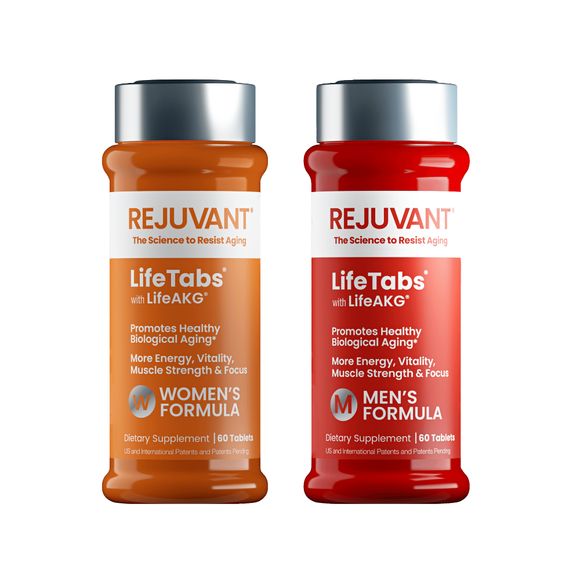
Rejuvant

Rejuvant® is a science-backed anti-aging supplement featuring a proprietary sustained-release form of Calcium Alpha-Ketoglutarate (Ca-AKG), clinically shown to reduce biological age by an average of 8 years over 7 months.
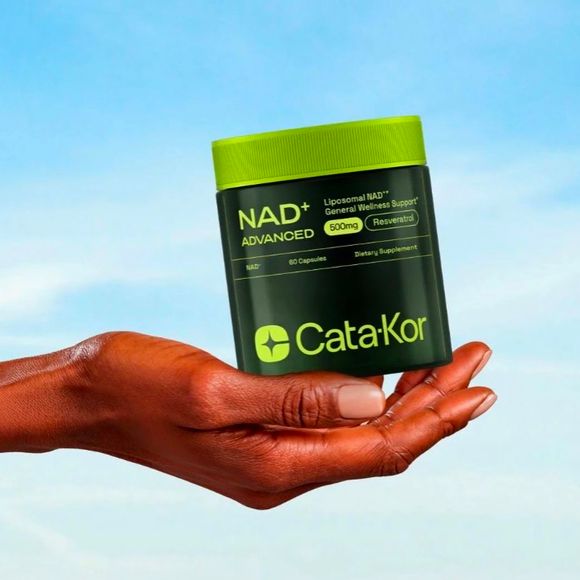
Catakor
Cata-Kor is a longevity supplement brand best known as the #1 selling NAD+ product on Amazon. Their lineup includes liposomal NAD+ capsules (250mg and 500mg with resveratrol), an NMN supplement, and a CA-AKG-based skin, hair, and nails formula, all GMP-manufactured and third-party tested for purity and potency.
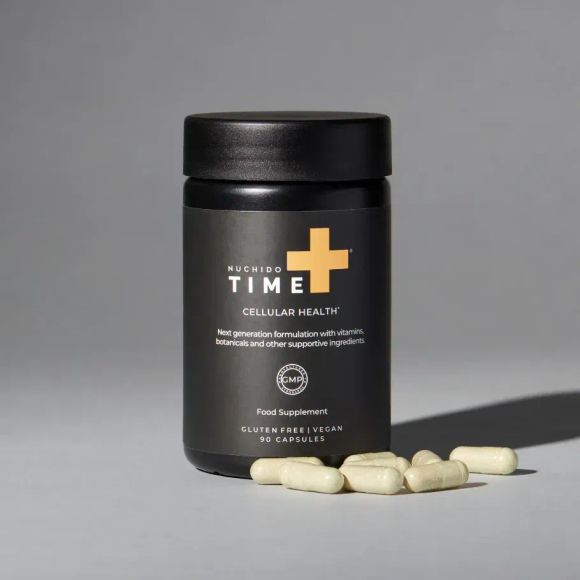
Nuchido

Nuchido TIME+ is a science‑backed supplement formulated to support cellular health by boosting NAD⁺ levels, antioxidants, and botanicals. It’s designed to help maintain energy, repair, and vitality as you age.
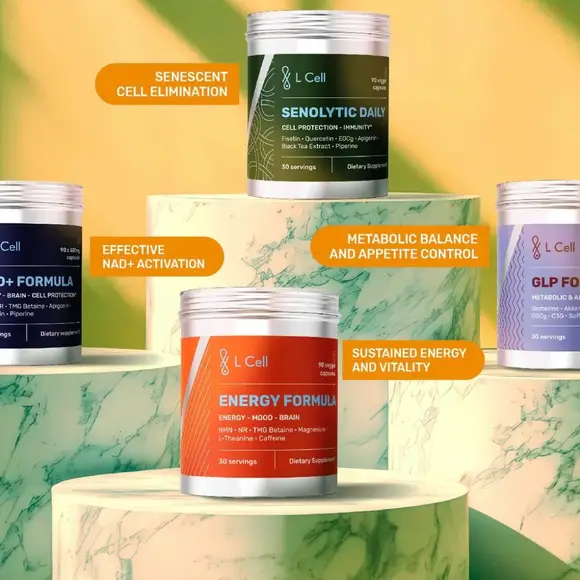
L Cell
L Cell is a science-led longevity supplement brand offering third-party lab-tested NAD+ boosters, senolytics, antioxidants and other compounds mapped to the hallmarks of ageing. Founded in cooperation with UCL alumni and the Life Sciences Centre at Vilnius University, it positions itself as a manufacturer rather than a reseller, with a built-in Longevity Quiz and educational "Longevity School" content.