Knowledge
Magazine
-

The 24-Hour Sleep Model: Why Better Sleep Starts the Morning Before
8 min read
-

Eating for Longevity: Lessons From the World's Oldest People
9 min read
-

The Summer Health Kit: Supplies and Gadgets for Hot Days and Warm Nights
9 min read
Weekly picks on longevity, brands, and health science. No spam—unsubscribe anytime.
Tools
- →The 30s Longevity Guide for Women
- →Postpartum Recovery Guide
- →Perimenopause Longevity Guide
- →Dopamine Reset Guide
- →Pregnancy Longevity Guide
- →Peptide Guide
- →Home Detox Guide
- →Slow Aging Guide
- →Pro Supplement Guide
- →Safe Supplement Guide
- →Bio Age Calculator
- →Blood Testing Guide
- →Deep Sleep Guide
- →Pro Longevity Dashboard
By Category
By Goal
Knowledge
- →What is Longevity?
- →Improve diet
- →More focus
- →Look younger
- →Lose weight
- →Track biomarkers
- →Improve sleep
- →Build muscle
- →Increase cardio
- →Detect diseases
- →Recover faster
- →Relieve stress
Magazine
-
The 24-Hour Sleep Model: Why Better Sleep Starts the Morning Before
8 min read
-
Eating for Longevity: Lessons From the World's Oldest People
9 min read
-
The Summer Health Kit: Supplies and Gadgets for Hot Days and Warm Nights
9 min read
Weekly picks on longevity, brands, and health science. No spam—unsubscribe anytime.
Brands
- →Apps
- →At Home Tests & Kits
- →Events
- →Experts & Clinics
- →Foods & Beverages
- →Gadgets & Equipment
- →Gyms & Workouts
- →Supplements
- →Travel & Retreats
- →Wearables & Trackers
Tools
- →The 30s Longevity Guide for Women
- →Postpartum Recovery Guide
- →Perimenopause Longevity Guide
- →Dopamine Reset Guide
- →Pregnancy Longevity Guide
- →Peptide Guide
- →Home Detox Guide
- →Slow Aging Guide
- →Pro Supplement Guide
- →Safe Supplement Guide
- →Bio Age Calculator
- →Blood Testing Guide
- →Deep Sleep Guide
- →Pro Longevity Dashboard

Discover
Connect
Community Discussions
Calibre Bio Bankruptcy: What It Means — and Why Garmin Should Pay Attention

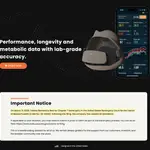
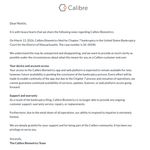
The bankruptcy of Calibre Bio is more than just a company going under — it has very real implications for users.
Their devices rely heavily on remote servers to store the spirometry data (portal.calibrebio.com). If those servers go offline, sessions won’t sync, historical data may become inaccessible (exports are processed on their servers), and the core functionality of the device could stop to work entirely.
If you’re a customer (like me), it’s worth acting quickly: export any data you can, save reports/screenshots, and keep an eye on whether parts of the system can run locally. Once backend infrastructure is discontinued, recovery will probably impossible.
Strategically, this situation highlights a bigger gap in the wearables market. Companies like Garmin still rely mostly on estimated VO₂max based on heart rate and activity patterns. These estimates can be useful, but they’re often off - especially outside steady-state conditions.
Calibre’s approach was fundamentally different and I really liked it for optimizing my health and training: innovative device, real spirometry data, measuring actual oxygen consumption and metabolic response instead of inferring it. That’s a completely different level of accuracy and opens the door to much better training and health guidance (e.g. real fat oxidation vs. carb usage).
This is why the current situation feels like a missed opportunity. If a company like Garmin stepped in, they wouldn’t just acquire a product—they’d gain access to real metabolic measurement and could significantly upgrade their entire performance stack.
Right now, though, the immediate reality is simpler: if the servers go dark, the ecosystem likely goes with them.
From a technical angle and as a happy Calibre Bio user: the device communicates via Bluetooth, it might be possible to reverse engineer the protocol and build a community-driven app. That would at least preserve basic functionality and access to raw spirometry data. Of course, this depends on how locked down the communication is, but it wouldn’t be the first time a stranded device gets a second life this way.
UPDATE 2026-05-09:
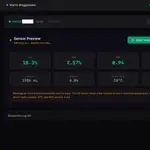
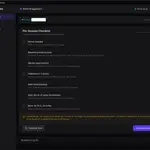
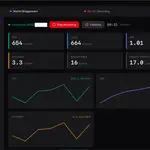
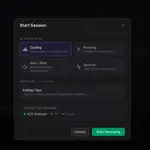
Built an alternative spiroergometry software called OpenSpiro that can be used with calibre bio devices and is free and local. Just download it here: https://openspiro.com/download
The bankruptcy of Calibre Bio is more than just a company going under — it has very real implications for users.
Their devices rely heavily on remote servers to store the spirometry data (portal.calibrebio.com). If those servers go offline, sessions won’t sync, historical data may become inaccessible (exports are processed on their servers), and the core functionality of the device could stop to work entirely.
If you’re a customer (like me), it’s worth acting quickly: export any data you can, save reports/screenshots, and keep an eye on whether parts of the system can run locally. Once backend infrastructure is discontinued, recovery will probably impossible.
Strategically, this situation highlights a bigger gap in the wearables market. Companies like Garmin still rely mostly on estimated VO₂max based on heart rate and activity patterns. These estimates can be useful, but they’re often off - especially outside steady-state conditions.
Calibre’s approach was fundamentally different and I really liked it for optimizing my health and training: innovative device, real spirometry data, measuring actual oxygen consumption and metabolic response instead of inferring it. That’s a completely different level of accuracy and opens the door to much better training and health guidance (e.g. real fat oxidation vs. carb usage).
This is why the current situation feels like a missed opportunity. If a company like Garmin stepped in, they wouldn’t just acquire a product—they’d gain access to real metabolic measurement and could significantly upgrade their entire performance stack.
Right now, though, the immediate reality is simpler: if the servers go dark, the ecosystem likely goes with them.
From a technical angle and as a happy Calibre Bio user: the device communicates via Bluetooth, it might be possible to reverse engineer the protocol and build a community-driven app. That would at least preserve basic functionality and access to raw spirometry data. Of course, this depends on how locked down the communication is, but it wouldn’t be the first time a stranded device gets a second life this way.
UPDATE 2026-05-09:
Built an alternative spiroergometry software called OpenSpiro that can be used with calibre bio devices and is free and local. Just download it here: https://openspiro.com/download
Please sign in to post a reply.