Knowledge
Magazine
-

Oura vs Whoop vs Apple Watch: The Quantified Scientist on What the Accuracy Data Shows
15 min read
-

The Complete Guide to Testosterone Optimization — Part 3: Stress, Psychology, and Purpose
9 min read
-

Dr. David Barzilai: A Harvard Medical School Lecturer on the Five Health Habits Worth Your Time
18 min read
Weekly picks on longevity, brands, and health science. No spam—unsubscribe anytime.
Tools
- →The 30s Longevity Guide for Women
- →Postpartum Recovery Guide
- →Perimenopause Longevity Guide
- →Dopamine Reset Guide
- →Pregnancy Longevity Guide
- →Peptide Guide
- →Home Detox Guide
- →Slow Aging Guide
- →Pro Supplement Guide
- →Safe Supplement Guide
- →Bio Age Calculator
- →Blood Testing Guide
- →Deep Sleep Guide
- →Pro Longevity Dashboard
By Category
By Goal
Knowledge
- →What is Longevity?
- →Improve diet
- →More focus
- →Look younger
- →Lose weight
- →Track biomarkers
- →Improve sleep
- →Build muscle
- →Increase cardio
- →Detect diseases
- →Recover faster
- →Relieve stress
Magazine
-
Oura vs Whoop vs Apple Watch: The Quantified Scientist on What the Accuracy Data Shows
15 min read
-
The Complete Guide to Testosterone Optimization — Part 3: Stress, Psychology, and Purpose
9 min read
-
Dr. David Barzilai: A Harvard Medical School Lecturer on the Five Health Habits Worth Your Time
18 min read
Weekly picks on longevity, brands, and health science. No spam—unsubscribe anytime.
Brands
- →Apps
- →At Home Tests & Kits
- →Events
- →Experts & Clinics
- →Foods & Beverages
- →Gadgets & Equipment
- →Gyms & Workouts
- →Supplements
- →Travel & Retreats
- →Wearables & Trackers
Tools
- →The 30s Longevity Guide for Women
- →Postpartum Recovery Guide
- →Perimenopause Longevity Guide
- →Dopamine Reset Guide
- →Pregnancy Longevity Guide
- →Peptide Guide
- →Home Detox Guide
- →Slow Aging Guide
- →Pro Supplement Guide
- →Safe Supplement Guide
- →Bio Age Calculator
- →Blood Testing Guide
- →Deep Sleep Guide
- →Pro Longevity Dashboard

Discover
Connect
Laura Schaefer Schmieding
Level 1
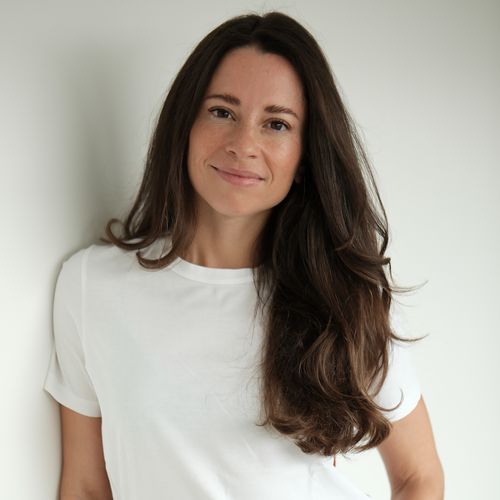
Laura is a founder, research-translator, and investor closing the gender gap in longevity science. With a CS degree from UPenn and certifications in Women's Health from the IWHI, she specializes in data, healthspan optimization, and female longevity. Co-founder of YUEVA Longevity, Longevity Biotech Fellow, and author of The Reproductive Rebellion on Substack, she helps women in their 30s take a science-backed approach to aging.
Apps


At Home Tests & Kits


Gadgets & Equipment


Supplements


My Routines
I'm writing this at the end of my third trimester, so I've flagged what changes in pregnancy. None of this is medical advice, and for anything pregnancy-specific the safety data is often thinner than people assume, so talk to your own doctor.
To me, a routine is what I do at least weekly. Other things I do for my health I file under my wider regimen, not my routine. What follows is the weekly core, sorted into must-haves (non-negotiables) and nice-to-haves (things I value but could drop).
SLEEP AND CIRCADIAN RHYTHM (the foundation)
- Same wake time every day, within 30 to 60 minutes. [Must-have] Regularity matters more than total hours: a 2024 UK Biobank study of 60,000+ people found sleep-timing consistency predicted mortality better than sleep duration. It's the lever Matthew Walker keeps returning to in Why We Sleep.
- Early dinner, ideally by 6pm; in bed around 10 to 11pm. [Must-have] Eating late clearly worsens my sleep and pushes against the circadian clock.
- Cool, controlled bedroom, with a humidifier and air filter. [Must-have] Your core temperature has to drop slightly to fall and stay asleep.
- Blue-light defense at night: phone filter plus blue-blocking glasses, because I won't pretend I don't read on my phone before bed. [Nice-to-have] Evening blue light suppresses melatonin.
- Sunrise wake-up lamp instead of full blackout. [Nice-to-have] I wake better easing into light.
- Melatonin spray about 30 minutes before bed, not nightly. [Nice-to-have] The spray acts faster for me. In pregnancy I take less; the human data is limited and mostly reassuring for short-term low doses, but not well studied, so I keep it an individual call and the dose small.
- Weighted blanket when I'm wound up. [Nice-to-have] In pregnancy I stopped using it.
MY MORNING SEQUENCE (the order is deliberate)
- Tongue scraper first, before brushing. [Nice-to-have] Clears the overnight coating.
- Hot water with electrolytes and lemon, outside on the terrace in direct morning sun. [Must-have] Rehydrating is the obvious part. The non-negotiable part is the light: morning daylight is the strongest signal that sets your circadian clock, which is what makes the evening routine work.
- Coffee, for pleasure not function. [Nice-to-have] In pregnancy I switched to decaf. I drink it as a cappuccino, and into the milk go creatine and collagen, plus magnesium in pregnancy.
- Small bowl of oats with Greek yoghurt (about two-thirds) and kefir (one-third), nuts, berries. [Must-have] I used to skip breakfast. A nutritionist argued that for women with long, stressful days, eating in the morning may be gentler on the stress-hormone system than fasting. That cortisol link isn't well proven, so I treat it as personal. Breakfast suits me, so I kept it. In pregnancy I eat more, and stir in psyllium husk (Flohsamenschalen) soaked in water first, for digestion.
MOVEMENT (mixed, and I don't overdo intensity when life is intense)
- Strength training twice a week, about an hour. [Must-have] The closest thing to a longevity drug we have, for muscle, bone and metabolic health. It stays a must-have in pregnancy: ACOG encourages strength and aerobic training in uncomplicated pregnancy, and at the end of my third trimester I'm still using 5 to 10kg weights. First trimester: I did nothing. I was too nauseous to train, and the only thing that stopped me being violently sick at night was Coca-Cola, against every principle I hold. You can't always biohack your way out. I came back around week 20.
- Cardio with an eye on VO2 max: HIIT-style classes, sprints, or indoor-bike intervals. [Must-have] Cardiorespiratory fitness is one of the strongest predictors of lifespan; in a study of 120,000+ people, higher fitness tracked with lower mortality with no real ceiling. In pregnancy I stopped running and walk instead.
- Walking, around 10,000 steps a day, usually with my dog. [Must-have] The 10k number is a marketing invention (a 1965 Japanese pedometer, the "10k-step meter"); the real benefit mostly shows up near 7,000. I still aim for 10k because the dog walk gets me into nature.
- Dialing intensity down under stress. [Nice-to-have] Too much HIIT backfires when stress is high, so I swap toward yoga.
FOOD AND EATING
My rule: nutrients from food first. Chew properly, eat fresh food, and remember absorption depends on a working gut.
- Organic, whole foods; almost no processed food. [Must-have]
- As little sugar as I reasonably can. [Must-have] But I still eat a croissant now and then, and I won't give up good German bread. This is about living, not optimizing yourself into misery.
- Bone broth, in the morning and as my fallback if I'm hungry after 6pm. [Nice-to-have] Easy protein and collagen; in pregnancy, when protein needs climb, sometimes daily. It lets me hold the early-dinner cutoff without going to bed hungry.
- Specialty, organic coffee only. [Nice-to-have] Coffee is heavily sprayed, so pesticide load is real; cleaner roasting helps too.
- Alcohol: very little. I love a glass of wine, and for me the enjoyment outweighs the downside. [Nice-to-have] This is my one vice, not a health practice. In pregnancy I don't drink.
SUPPLEMENTS (test first, then supplement)
I'm reluctant to share supplement protocols; this is the most individual part. Test your bloods and supplement to your gaps, not to a list off the internet. I don't take multivitamins or combination complexes either: too little of one thing, too much of another. I buy single nutrients and dose each to what I need. Staples most people can reasonably consider:
- Omega-3. [Must-have]
- Magnesium. [Must-have] I keep taking it in pregnancy.
- Vitamin D, but check your level first. [Must-have] The dose depends entirely on where you start, and more isn't better.
- Creatine. [Must-have] Outside pregnancy, one of the best-studied supplements; for me it improved energy and muscle quality. I continue it in pregnancy, but to be clear, there are no human safety trials of creatine in pregnancy yet, only preclinical support, so it's a personal choice, not a recommendation.
- Collagen. [Nice-to-have] For skin and connective tissue. The evidence is modest, and it's protein, so I hold it loosely.
STRESS AND RECOVERY (the simplest things work best)
- A walk, ideally in nature with the dog. [Must-have]
- Sitting down, eyes closed, breathing for five minutes. [Must-have] It shifts you toward the calming branch of the nervous system, it's free, and breathing is the one thing we can always control.
- Sauna, once or twice a week (traditional, not infrared). [Nice-to-have] In the Finnish cohort study, using it 4 to 7 times a week tracked with markedly lower cardiovascular and all-cause mortality than once weekly. It also calms me. In pregnancy I still go, but cooler and shorter, and the rule I hold to is that my core temperature shouldn't actually rise. Mainstream guidance (ACOG) advises caution, especially first trimester, because of hyperthermia. There isn't enough data either way, so I keep it mild and listen to my body. Not for everyone; ask your doctor.
- Regular massage, including lymphatic drainage. [Nice-to-have] Helps me recover and switch off; especially good in pregnancy.
- Cryotherapy, never ice baths. [Nice-to-have] I don't enjoy ice baths, but I love whole-body cryo. A session after a workout gives me a mood lift that carries all day. I know cold straight after lifting may blunt some muscle-building adaptation, so I factor that in. I only do it when I feel good, in my follicular phase, never when stressed. In pregnancy I don't.
REDUCING TOXINS (this ties straight to hormones)
Plastics leach endocrine-disrupting chemicals, and leaching rises with heat.
- Glass and stainless steel only for food and drink: bottles, containers, even the milk frother. [Must-have]
- Glass-bottled or filtered water, plus air filters at home. [Nice-to-have] In our case Munich tap water is good and the pipes are fine, so tap water is reasonable.
- Natural fibers (cotton underwear), and more thought into workout fabrics. [Nice-to-have]
- Organic food and organic fertilizers in the garden. [Nice-to-have]
INTIMATE AND VAGINAL HEALTH
- Water only, no soaps. [Must-have] The vaginal microbiome is self-regulating and Lactobacillus-dominant, and soaps disrupt it. I trust one brand for intimate care and otherwise keep it simple.
- I've tested my vaginal microbiome. [Nice-to-have] Same logic as blood testing; you can also support it through nutrition.
WHERE I ACTUALLY STAND
I'd call myself a longevity maximalist. I'm inherently curious, I love gadgets, and I try a lot of them. Some stick, most don't, and that's part of the fun.
But I'm honest about what this does. As much as I love living and eating well, I don't believe lifestyle alone will extend human lifespan dramatically. The basics (sleep, movement, real food, sunlight, fewer toxins, less stress) do most of the work for how well you live now, and they buy time. What they don't do is circumvent age-related disease and decay. I think only biotech does that.
I want to decide for myself when I die, not have biology decide for me. Until the therapies that truly move the needle exist, I'll treat my body as well as I can. That's what this routine is for.