



Dr. David Barzilai: A Harvard Medical School Lecturer on the Five Health Habits Worth Your Time
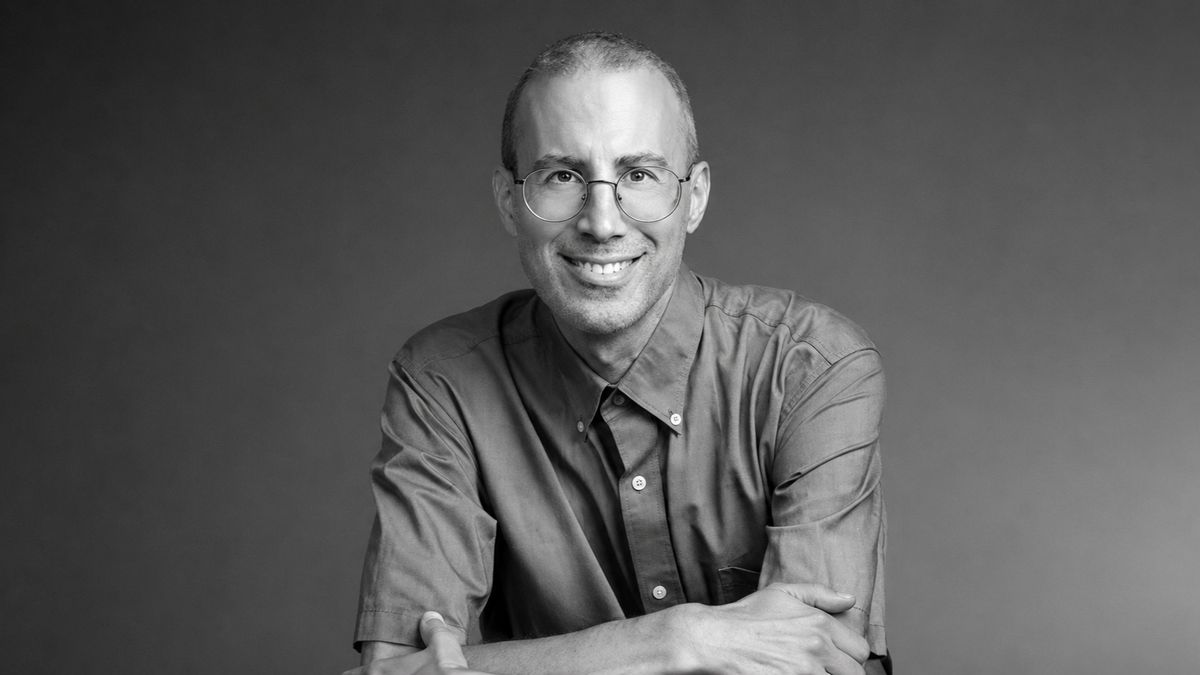
Few people are better placed to cut through the noise of the longevity industry than Dr. David Barzilai. A physician specialising in longevity medicine and a Lecturer at Harvard Medical School, he has spent nearly two decades helping individuals and organisations turn health science into something practical and measurable. He holds a PhD in Health Services Research, the discipline concerned with working out which interventions actually deliver the best outcomes, and he is a Diplomate of the American Board of Lifestyle Medicine. He is also an inaugural faculty member and Trustee at the Geneva College of Longevity Science.
Most recently, he served as medical editor of Harvard Health Publishing's first Special Health Report devoted entirely to longevity, Pathways to Longevity. Through his consultancy, Barzilai Longevity Consulting, and his work at agingdoc.com, he designs individualised, evidence-based longevity plans for a global clientele that ranges from executives and clinicians to forward-thinking organisations, and he sits on advisory boards at the intersection of clinical practice and longevity science. Named one of Storyful's Top 10 Emerging Voices in Wellness and Longevity, he is known for translating complex scientific advances into clear, actionable strategies.
That last quality is exactly why we wanted to talk to him. The questions we put to David are the ones our community actually asks: where to start when longevity feels overwhelming, how to spot marketing dressed up as science, which habits give a busy professional or parent the biggest return, and what is genuinely worth your money and attention. His answers are refreshingly direct. The best-evidenced interventions, he argues, are the ones almost everyone already has, and as he puts it, the dull fundamentals have the best exchange rate going, on money and on time both.
Here is our full conversation.
1. You served as medical editor of Harvard Health Publishing's first Special Health Report devoted entirely to longevity, Pathways to Longevity. What did you most want an ordinary reader to walk away understanding?
Two things, really.
The first is that the interventions with the best evidence are the ones almost everyone already has, and that's good news rather than a letdown. Move your body and keep your strength. Sleep enough, and on a regular schedule. Eat mostly whole foods. Stay close to people you care about. Don't smoke, and keep your blood pressure and metabolic numbers in range. That cluster accounts for most of the longevity you can actually influence, and none of it requires a purchase. We were also deliberate about a word: you'll almost never see "anti-aging" in the report. It isn't a scientific term, and it tends to be the favorite phrase of people selling something. What we care about is healthspan, the years you spend in good health, not some fantasy of stopping the clock.
The second thing is what makes the report distinctly Harvard. It takes the frontier seriously without overselling it. We go straight at the genuinely exciting science, the hallmarks-of-aging framework, GLP-1s and SGLT2 inhibitors showing benefits well beyond their original uses, rapamycin, senolytics, the biological clocks, and we don't wave any of it away. But we're honest about where each one actually sits: proven in humans, still in mice, or promising but early. And there's a point that's easy to lose in all the noise. As remarkable as that pipeline is, no investigational longevity therapy today comes close to the evidence we already have for the boring proven tools, statins, blood-pressure control, vaccines. Saying so isn't being conservative. It's just being accurate, and accuracy is what earns a reader's trust.
If someone closes the report with the fundamentals locked in, a clear sense of what's genuinely coming, and a working filter for telling a real breakthrough from a sales pitch, then it did its job. That filter runs through everything else I do, and I suspect it's why your community and I fit well together.
2. When someone is curious about longevity but overwhelmed by where to begin, what do you tell them to do first?
Pick the one fundamental you're worst at, almost always sleep or diet, and fix that before you go near anything advanced.
I name sleep and diet on purpose. They're the ground everything else stands on, and they're where even health-aware people quietly slip. If sleep is your weak point, start with a consistent wake time and a real wind-down hour before bed. Regularity matters more than people expect here; in a cohort of over sixty thousand adults, how consistent your sleep timing was predicted mortality even better than how long you slept. Higher sleep regularity was associated with a 20 to 48 percent lower risk of all-cause mortality, and it out-predicted duration outright (Windred et al., Sleep, 2024). If diet is the weak point, skip the trendy protocol. Build meals around whole foods, get enough protein, and avoid the big glucose spikes you get from refined carbohydrate eaten on its own. Practically, that means anchoring meals with protein and fiber, saving the refined carbs for the end of the plate rather than the start, and taking a ten-to-fifteen-minute walk afterward, which blunts the post-meal spike measurably.
Free Guide: Pro Longevity Dashboard
Add 20+ Healthy Years to Your Life
(Even with limited time and knowledge)
By subscribing you will also be signed up for the New Zapiens newsletter
25,000+ Downloads • 100% Free

Exercise sits right alongside both, and I'd widen what people think counts. Aerobic work and resistance training both matter, and you don't need a punishing routine to get most of the payoff. One change held for a year beats five abandoned by February. The frontier can wait until the basics run on autopilot.
3. How do you personally tell a genuine breakthrough from clever marketing, and which over-hyped claims are you most tired of seeing?
I run four quick questions, and most claims fail at least one of them. Was it tested in humans, or am I looking at a mouse study? Does the effect land on something that matters to an actual person, living longer, avoiding disease, or just on a surrogate marker that sounds impressive? Does whoever is making the claim profit from my believing it? And has anyone replicated it, or was it one splashy result that quietly didn't hold up?
As for the claims that wear me down: anything promising to "reverse aging," which is advertising rather than biology; the endless premium capsules built on a single animal study and a charismatic founder; and the "the one test your doctor won't order" genre, which usually exists to sell you a panel and then the supplements to fix whatever it finds. Real advances tend to show up quietly in good trials and then get argued over by scientists for years before anyone calls them settled. We actually put a provider checklist in the report for exactly this, and the giveaways line up: do they build on lifestyle first, are they open about how they make their money, do they avoid calling things "proven" to slow aging when nothing yet is. A genuine breakthrough almost never arrives as a discount code.
4. Where do you most often see people waste money or effort in the name of health optimisation?
Three places. First, supplements aimed at problems the person doesn't actually have. Most healthy, well-fed people get nothing from most of what's in their cabinet, and the disciplined move is to test for a real deficiency, fix that, and stop. Second, gadgets and "detox" products sold as a way to cancel out a lifestyle no device can rescue.
The third one people rarely count, and it's the one I'd flag hardest: attention. The hours poured into hunting for the perfect obscure protocol would, almost every time, have returned far more spent walking, cooking, sleeping, or lifting. The dull fundamentals have the best exchange rate going, on money and on time both. If a purchase isn't reinforcing a fundamental you've already nailed, it's usually polishing a rounding error.
5. For a busy professional or parent in their late thirties with limited time, which handful of habits give the biggest return on healthspan?
Five, and they survive contact with a real schedule.
Resistance training at least twice a week, even short sessions, to protect the muscle and bone you'll badly want in your sixties. Pair it with regular movement and some weekly cardio that leaves you a little breathless; the guideline target is 150 minutes of moderate or 75 of vigorous activity a week, and cardiorespiratory fitness is one of the strongest longevity predictors we have, the least-fit group in the big treadmill studies carried risk on the order of having coronary disease (Mandsager et al., JAMA Network Open, 2018). Steps are the easiest version of this to track, and it's a gradient rather than a magic number: compared with about 2,000 steps a day, 7,000 was associated with roughly a 47 percent lower risk of dying over the study period, with further incremental gains as you climb, around 48 percent at 10,000 and 55 percent at 12,000 (Ding et al., Lancet Public Health, 2025). So 7,000 is a strong, realistic floor, and more still helps.
Keep your sleep schedule steady. Eat whole foods with enough protein and dodge the big post-meal glucose swings, rather than declaring war on one ingredient. And guard a few real relationships and some genuine downtime, because weak social connection carries mortality risk comparable to major medical risk factors, one of the most replicated findings in the field and one of the most ignored (Holt-Lunstad et al., PLOS Medicine, 2010). For a time-poor parent, "good enough every week" beats "perfect almost never," every time.
6. Sleep, movement, nutrition and stress get repeated so often they can feel like background noise. What is one thing about each that people still get wrong?
On sleep, people count hours and forget regularity. A steady wake time, weekends included, usually does more for how you feel than one extra ragged hour, and the mortality data now back that up (Windred et al., Sleep, 2024). There's a quiet irony, too, in chasing a perfect deep-sleep score until the anxiety about it starts costing you sleep.
On movement, the common mistake is assuming one hard workout buys back a day of sitting. It doesn't. Breaking up long stretches of sitting matters alongside your training, and the studied version is simple: two to three minutes of light movement every 30 to 60 minutes of sitting measurably improves your glucose and blood-pressure responses. You can't fully out-train a still life.
On nutrition, the recurring error is hunting for a single villain, carbs one year, fat the next, seed oils now. The pattern is what carries the weight, along with keeping your glucose reasonably stable and your protein adequate.
And on stress, people treat it as a purely mental problem and reach for a relaxation technique. The most dependable regulators are physical and social: moving, sleeping, daylight, time with people you trust. More often than not you manage stress better through the body than through the head.
7. You work a lot on cardiometabolic and cognitive health. What early signals should someone in their thirties or forties pay attention to without needing specialist tests?
Most of the useful early signals are measurable with ordinary tools, long before anything exotic, and I'd rather people measure than wait for symptoms.
On the cardiometabolic side, watch the waistline, since visceral fat around the middle flags risk even when the scale holds steady, and watch blood pressure, which stays silent until it isn't and can be checked at any pharmacy. On standard labs, I pay particular attention to fasting insulin and triglycerides, which often drift years before glucose does and give an early read on insulin resistance. For heart risk specifically, ApoB or a one-time lipoprotein(a) tells you more than standard cholesterol alone (the AHA's PREVENT calculator, which the report highlights, even turns this into a 10- and 30-year risk estimate and a "risk age"), and a coronary artery calcium score is a cheap, low-radiation way to see whether plaque is actually there once you're old enough for it to be informative.
On the cognitive side, the thing to absorb is that midlife brain health is mostly cardiometabolic and vascular health wearing a different label, the same insulin resistance, blood pressure, and lipids feed forward into dementia risk. Past watching those numbers, two levers have real evidence behind them. Exercise is the first, and it's more specific than people realize: aerobic and resistance training both help and seem to do different jobs, with resistance work showing particular benefit for global cognition and memory and aerobic work favoring memory and processing speed (network meta-analysis, older adults, 2025). Structured, progressive programs beat casual activity, and the protocols that have been studied are doable, roughly two-plus sessions a week, thirty to sixty minutes, intensity built up over time. The FINGER trial put this together, a two-year multidomain program combining exercise, diet, cognitive engagement, and vascular-risk management improved cognition in at-risk older adults, with the biggest gains in APOE4 carriers, the people at highest genetic risk (Ngandu et al., Lancet, 2015). Diet is the second lever, and the most brain-specific pattern is MIND, a Mediterranean-DASH hybrid built around leafy greens, berries, nuts, whole grains, olive oil, and fish, with red and processed meat kept low. The observational support is strong, though I'll be honest that the 2023 randomized trial found only modest gains that matched a calorie-restricted control group, which itself tells you how much weight and metabolic health are doing the work (Barnes et al., NEJM, 2023). The headline isn't a boutique panel in your thirties. It's getting the high-yield numbers measured, then actually acting on them.
8. Supplements and peptides are everywhere right now. For someone who will never read the studies themselves, how should they think about what is worth trying?
Start from "probably not, show me the evidence," because that's where most of it lands.
The honest supplement shortlist is short, and mostly about plugging documented gaps. Vitamin D if you're low. B12 if you're at risk or eat little animal product. Iron if a test says so. Omega-3 if you rarely eat oily fish. Creatine is one of the few with a genuinely good evidence base beyond deficiency, around 3 to 5 grams a day, for strength and maybe cognition (Manson et al., NEJM, 2019, on the limits of supplementing people who are already replete). Past that, most supplements do little for a healthy, well-fed person, and "natural" is not a synonym for "works." Where you do buy, stick to brands carrying a third-party seal, ConsumerLab, NSF, USP, because the category is genuinely unregulated and contamination is real.
Peptides deserve more nuance than the internet gives them, because they aren't one thing. Each has its own evidence base, and the honest summary is that enthusiasm runs well ahead of the data in most cases, though it really does vary peptide by peptide and the underlying biology is often interesting. The GLP-1 receptor agonists are the clear exception, semaglutide and tirzepatide have large randomized trials behind them, including cardiovascular and kidney outcomes, so those are established medicines, not "peptides" in the wellness sense (Lincoff et al., NEJM, 2023). After that the evidence thins out fast. Compounds like BPC-157 and the growth-hormone secretagogues are early, mostly preclinical or small-study, and being used ahead of solid human data, which is the fair place to put them: interesting in parts, unproven in most. For someone who won't read the literature, my guidance is to treat anything in this space as genuinely experimental, do it only with a knowledgeable physician involved, and remember that for nearly everyone the money does far more in food, a gym membership, and protected sleep.
9. Microplastics and everyday environmental exposures are an area you work on. Which small changes are actually worth making, and which worries are overblown?
I'll split this into what we know and what we suspect, because the conversation has gotten ahead of the data.
What we know is striking enough on its own. Micro- and nanoplastics now turn up in human blood, in placenta, in arterial plaque. A 2024 study in the New England Journal of Medicine found that people with plastics in their carotid plaque had roughly a 4.5-times higher rate of heart attack, stroke, or death over about three years (Marfella et al., NEJM, 2024). That's a serious signal. What we don't know is whether the plastic caused any of it. The study was observational, confounding is plausible, and other researchers raised fair questions about contamination during handling. The endocrine disruptors that travel with plastics, BPA and phthalates, have a somewhat firmer mechanistic track record. So my honest read is that this is a warning worth acting on in proportion, not a proven cause of disease.
Given that, I cut exposure where it's cheap and low-regret, and I don't lose sleep over the rest. Three changes give the best return. Don't heat or store hot food in plastic, since heat and fat are what drive the chemicals out of the plastic and into your food, that's the one I'm most confident about. Drink filtered tap water from glass or steel instead of plastic bottles, which carry higher particle loads. And ease off the heavily packaged ultra-processed foods, which trims several exposures at once while doing you other favors. What I'd skip is the small "detox" industry that has sprung up here, the products promising to clear plastics from your body, which are essentially marketing with nothing credible behind them. Do the few sensible things and move on. The chronic worry is itself the more certain harm.
10. Wearables and at-home tests promise to track everything. When does that data genuinely help, and when does it just add noise?
I'd actually push back on the framing a bit, because the underlying trend is real and increasingly central to precision medicine. Broadly, you can't manage what you can't measure, and continuous, at-home data is becoming one of the better tools we have for catching problems early and tailoring care to the person in front of you rather than the population average.
Used well, the value is concrete. A wearable that shows you exactly how a few drinks or a late dinner wrecks your sleep turns a vague intention into a behavior you actually change. A continuous glucose monitor can show you which meals spike you and let you adjust on the spot. An at-home panel can surface something real, low vitamin D, an off thyroid, an unexpected lipid or insulin result, and send you to your doctor sooner than you'd otherwise have gone. One signal I find genuinely useful is a resting heart rate or heart-rate variability that drifts off your personal baseline for several days, which often flags illness, overtraining, or poor recovery before you consciously feel it. This is the direction medicine is heading, and for a motivated person it's mostly a gift.
The caveats are about reading the data, not the data itself. Consumer-grade sensors carry real measurement error, so a single bad night's score isn't a diagnosis, and treating it like one can do more harm through anxiety than the number ever warranted. The skill is telling a genuine trend from day-to-day noise and acting on the trend, measure, find the pattern, change something, then check whether the change actually moved it. That's precision health working as intended. Collecting dashboards you never act on is the failure mode, but that's a problem of how the tool gets used, not of the tool.
11. What development in longevity science over the next few years are you most excited to see reach everyday people?
Earlier, cheaper, blood-based detection, used well, with the honest caveat that the evidence is still being written even as the tools arrive.
The clearest case is multi-cancer early detection. The NHS-Galleri trial, the first large randomized trial of an MCED blood test, just reported its full results, and the picture is instructive precisely because it's mixed. It missed its primary endpoint, reducing combined late-stage (III and IV) cancers, but Stage IV diagnoses fell about 14 percent, early-stage (I and II) diagnoses rose 16 percent, the test roughly quadrupled the cancer-detection rate alongside standard screening, and cancers showing up as emergencies dropped about 25 percent (GRAIL/NHS-Galleri, ASCO, 2026). So it's genuinely promising and not yet proven on the outcome that matters most, fewer cancer deaths. That's exactly the kind of result I want people able to read honestly: encouraging, real, and not a finished story.
What excites me even more is the layer arriving behind the single-purpose tests, broad proteomic profiling. Using platforms that measure thousands of blood proteins at once, researchers working with the UK Biobank have built protein scores that predict the 10-year onset of dozens of different conditions, and for some, type 2 diabetes among them, the proteomic score beat both a genetic risk score and standard markers like HbA1c (UK Biobank proteomic studies, 2023). Picture one blood draw informing your risk across many diseases at the same time, while there's still room to act. None of this replaces the proven prevention we already have, that's the whole point, it works with it. The reason I'm optimistic isn't a single miracle. It's that the gap between what scientists can measure and what reaches an ordinary, motivated person is finally closing.
Free weekly newsletter
Your weekly brief on
living longer – without
overhauling your life
10,000+ readers get smarter about their health every Thursday. Join them.
- Science broken down for real life
- Daily health routines from leading experts
- Free health guides & tools every week
No spam. Unsubscribe anytime.
Read by 10.000+ health-conscious readers.

Author: Dr. David Barzilai
Dr. David Barzilai, MD, PhD, MBA, MS, DipABLM, is a globally recognized longevity medicine physician, Harvard Medical School Lecturer, and consultant dedicated to advancing healthy longevity through precision and evidence-based strategies. As the founder and CEO of Barzilai Longevity Consulting, he works with individuals and organizations to implement cutting-edge longevity science that extends healthspan, enhances performance, and optimizes long-term health outcomes. He holds a PhD in Health Services Research and is an inaugural faculty member and Trustee at the Geneva College of Longevity Science. Drawing on his multidisciplinary training, he drives personalized, data-driven interventions rooted in the latest research. A Diplomate of the American Board of Lifestyle Medicine, he applies a comprehensive approach that includes nutrition, physical activity, sleep, stress management, and emerging therapeutics to achieve measurable health improvements. Named one of Storyful's Top 10 Emerging Voices in Wellness and Longevity, he is a scientific and strategic advisor in the longevity and health-tech sectors, known for translating complex scientific advances into clear, actionable strategies. Through agingdoc.com, Dr. Barzilai partners with clients to design individualized longevity plans grounded in current evidence and tailored to their specific health and performance goals. His consultancy serves a diverse global clientele, from executives and clinicians to forward-thinking organizations. For organizational clients, Dr. Barzilai sits on advisory boards and provides consulting at the intersection of clinical practice and longevity science, working with teams to evaluate clinic strategies and protocols, apply emerging therapeutic evidence, and ensure interventions are delivering meaningful outcomes.
You might also like