



The Female Longevity Gap: Why One-Size Protocols Break Down
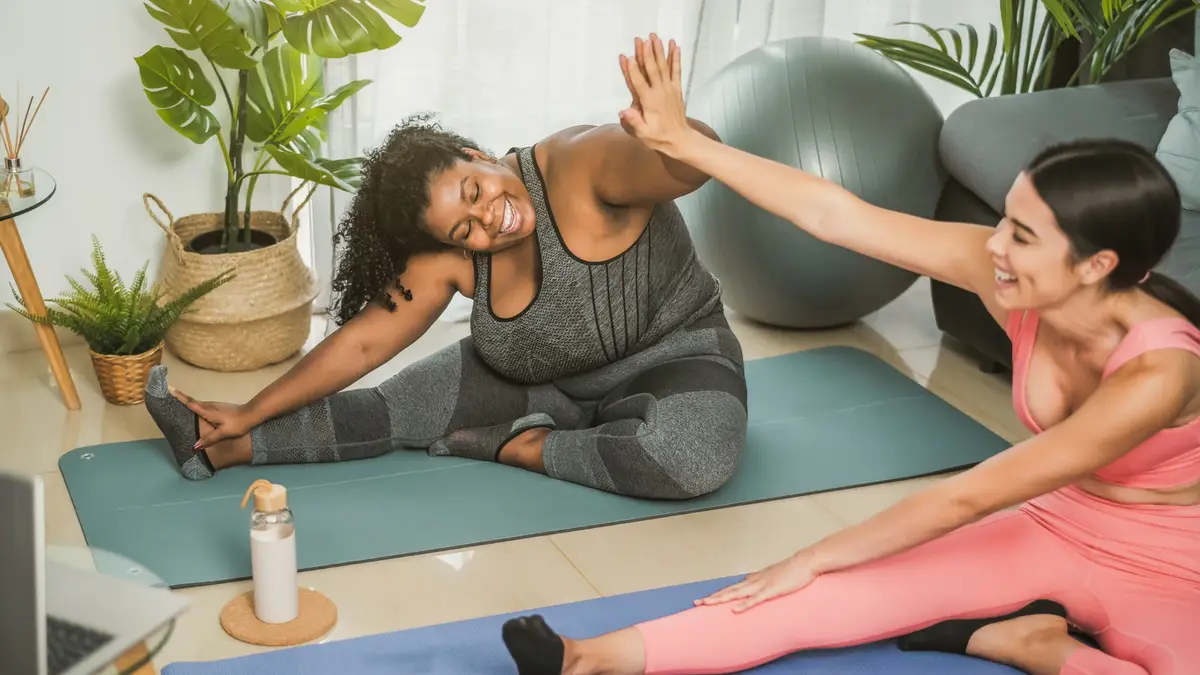
Women live longer on average, though not necessarily better.
Global analyses from the World Economic Forum and the McKinsey Health Institute's 2024 report estimate that women spend about 25% more of their lives in poor health than men, measured in years lived with disability, chronic disease, and reduced quality of life.
That is the female longevity paradox: more lifespan, less healthspan. It should bother anyone seriously interested in longevity, because it exposes a structural problem. We are extending years without consistently protecting the energy, resilience, and cognitive capacities that make those years worth living.
Part of the problem is simple. Medicine still relies heavily on a male baseline. Female biology across life stages has not been studied with enough precision, especially when it comes to how interventions perform across hormonal transitions.
Until 1993, women were largely excluded from clinical trials. The NIH Revitalisation Act of that year was a turning point. But even after that, women's health continues to get the headlines without enough female-specific data to change outcomes at scale. A review of federally funded RCTs found that around 75% of studies still did not report outcomes by gender.
The real question is not whether women should optimise. It is whether the same intervention, at the same intensity, at the same time, produces the same result in female physiology, especially after 35.
Where one-size-fits-all protocols break first
Most generic plans fail in lived reality. Lighter sleep, more stubborn belly fat, slower recovery, workouts that stop "working", and a nervous system that becomes less forgiving.
Too often, women blame themselves for this shift. They assume they have become less disciplined, less motivated, less on top of it. Usually, that is not the case. It is physiology meeting a system that was not built to handle female transitions well.
Menopause: a whole-system shift
Menopause is not just hot flashes and hormones. That framing misses the bigger picture.
This is a whole-body transition that can change how you sleep, how you handle stress, how you train, and how sharp your thinking feels. The exact capacities many high-performing women rely on daily.
The tricky part is that this does not need to feel dramatic. Many women slowly adapt to feeling worse and call it stress, age, or just life.
Free Guide: The 30s Longevity Guide for Women
The Critical Decade for Muscle, Bones, Metabolism & Hormones
(Evidence-based protocols for the decade that determines your health at 50, 60, 70)
By subscribing you will also be signed up for the New Zapiens newsletter
25,000+ Downloads • 100% Free
By the time something looks clearly wrong on paper, the change may have been happening for years. This is also why "normal blood tests" can be misleading. A single snapshot matters less than the direction of change over time.
A good place to start: measure and track waist circumference and grip strength over time. Grip strength is widely regarded by researchers as one of the most accessible indicators of long-term health, physical functioning, and longevity.
If you want a useful lab baseline, start with this: ApoB, fasting glucose-insulin trends (including HbA1c and HOMA-IR), hs-CRP, and a full thyroid panel (not just TSH).
The structural reserve you cannot biohack back
One of the most underappreciated truths in female longevity: bone and muscle loss are not optional. They are survival tissues.
Bone loss accelerates substantially around menopause. The Endocrine Society notes that up to 20% of lifetime bone loss can occur during the menopause stages. Muscle loss often follows the same direction if training and protein intake are not deliberate.
Once that reserve is gone, you do not simply biohack it back. Rebuilding it is far harder than protecting it early. This is where modern optimisation culture can become self-defeating. Some women stay focused on getting lean while slowly losing the very tissues that make healthy ageing possible.
Creatine also deserves more attention in women. It is still wrongly treated as a gym supplement, when in reality it is one of the better-studied tools for supporting strength, muscle function, and physical performance, with emerging evidence in areas like cognition and healthy ageing.
Focus on: full-body strength training at least three times per week, a consistent daily protein floor (for most women optimising for longevity, body composition, and muscle preservation: 1.2 to 1.6 g/kg/day), and consider creatine (a healthy starting point is 5 g/day of creatine monohydrate) before worrying about advanced supplements.
The high-performer trap: when discipline becomes debt
The major failure pattern in women is not one hack. It is the combination: hard training, not enough fuel, layered on top of a high-stress life. It is overcontrol and a belief that doing more will fix the problem.
Men can sometimes brute-force that longer. Women often pay faster, not because they are weaker, but because low energy availability disrupts systems that respond early in female physiology: reproductive signalling, bone turnover, mood, and recovery, especially when the body senses scarcity.
This is exactly why sports medicine has a name for it. Relative Energy Deficiency in Sport (RED-S): a state of low energy availability that can impair metabolic rate, bone health, immune system, cardiovascular function, and performance. You do not need to be an elite athlete to drift into it. It is what happens when training load and life stress chronically outpace fuelling and recovery.
Early signs are predictable: persistent fatigue, stalled strength, recurring injuries, hair shedding, mood constriction, or cycle disruption.
What looks like discipline is actually debt.
Pay attention to this. If you are tired, sore, flat, or not recovering as usual, do not add another hack. Increase fuel, prioritise sleep, and watch what happens.
Fasting and cold exposure: when the tools backfire
Two of the most over-marketed interventions in longevity are fasting and cold exposure. They can help. They are not universally beneficial.
Time-restricted eating can improve appetite control and metabolic markers, but the evidence base is mixed and rarely designed to give clean gender-specific guidance. In women, especially those under high life stress, training hard, sleeping poorly, or moving through hormonal transitions, fasting can become an additional stress signal rather than a helpful hormetic tool. If fasting worsens sleep, makes protein intake harder, or reduces training quality, it is miscalibrated.
Cold exposure deserves the same scrutiny. It is a real physiological stressor, not a character test. Yet it is often marketed like a universal win: mood up, inflammation down, resilience unlocked.
Controlled research suggests that sex differences emerge in both nervous system patterns and cognitive performance during cold exposure, with outcomes depending heavily on protocol and context. In one 2024 study, women showed slower reaction time and worse immediate memory and attention during cold exposure, whereas in men these measures were maintained or sometimes improved. Autonomic patterns differed as well, with HRV components improving only in men.
There may also be another reason the same level of cold exposure is not always equivalent in males and females. Research suggests that women may have to generate more internal heat to cope with the same amount of cold exposure, and that this response is linked to estrogen levels. The same ice bath can be a bigger physiological load for some women.
Female physiology is also cyclical. Core body temperature rises in the luteal phase (progesterone-driven), so thermal comfort and stress tolerance can shift across the cycle.
Here is the signal: judge fasting and cold exposure by sleep quality, recovery, mood, and training performance. If any of those worsen, the protocol is wrong for your current state.
Stress is only useful if you can resolve it
Women's immune systems operate by different rules than men's. Across many autoimmune diseases, women are affected far more often than men. The figure is often cited as close to 80%. A stronger immune response can be an advantage against infection. It can also increase the risk of the immune system becoming overreactive.
That matters because many popular longevity practices stack controlled stress signals onto an already high-stress life. In the right amount, stress drives adaptation. The wrong amount can shift immune signalling toward a more reactive, inflammatory state rather than better regulation.
Sleep loss alone has been shown to activate inflammatory pathways, and evidence suggests women may show greater immune activation under sleep disruption than men. Stress is only useful if the body has enough reserve to resolve it.
Simple takeaway: protect sleep, train for strength, and build at least one deliberate nervous-system downregulation practice into your longevity protocol. Two practical tools are slow breathing (10 minutes at roughly 6 breaths per minute, with a longer exhale) and guided mindfulness meditation (15 to 20 minutes daily).
Medication: the problem no one talks about enough
This is another place where female longevity gets lazy and expensive. Women are often given medication or supplement protocols built around male-default assumptions. Women do not respond to drugs the same way men do, and stacking amplifies the differences. A major review on gender differences in pharmacokinetics and adverse events reports that women have a nearly two-fold higher risk of adverse drug reactions across drug classes in multiple datasets.
Female pharmacology is also less static than male pharmacology. Hormonal state can change drug exposure within the same woman over time.
The same standard dose can produce different exposure because absorption, gastric motility, body composition, liver metabolism, and kidney clearance differ on average by gender, and hormonal transitions can shift these variables again. The male default has historically been treated as universal.
Side effects are the most honest data your body can give you. If you are going to stack prescriptions and supplements, you need real feedback from your body. If a protocol requires powering through, it is not longevity. It is a red flag.
Start here: simplify your stack enough that you can tell what is helping, what is hurting, and what changed after each meaningful change.
Write down everything you are currently doing for longevity (supplements, fasting, cold exposure, workouts, wearables, all of it) and circle the things you can actually track a response to.
Female longevity, without the pink marketing
Female longevity is not about more biohacking. It is about fixing the evidence gap.
It means accepting that the same intervention can flip direction depending on intensity, timing, and baseline state. Especially after 35, more is not automatically better. It is often just more stress on a system with less recovery capacity.
Protocols fail women when they are applied without context. The real lever is better calibration: the right dose, at the right time, for the biology you actually have.
This is the future of female longevity: precision over performance.
Free weekly newsletter
Your weekly brief on
living longer – without
overhauling your life
10,000+ readers get smarter about their health every Thursday. Join them.
- Science broken down for real life
- Daily health routines from leading experts
- Free health guides & tools every week
No spam. Unsubscribe anytime.
Read by 10.000+ health-conscious readers.


Author: Ivana Gajic Hoffman, MD
Board-certified medical doctor trained in Germany with over a decade of clinical experience, Head of the Longevity Department at AUMAR Clinic in Zurich, with executive education from Harvard Medical School and the Geneva College of Longevity Science. My work now sits at the intersection of regenerative medicine, precision diagnostics, and longevity science - translating aging biology into individualized protocols for people who want to influence how they age.
You might also like