


The Honest Science of Living Longer: In Conversation With Eric Verdin, President and CEO of the Buck Institute
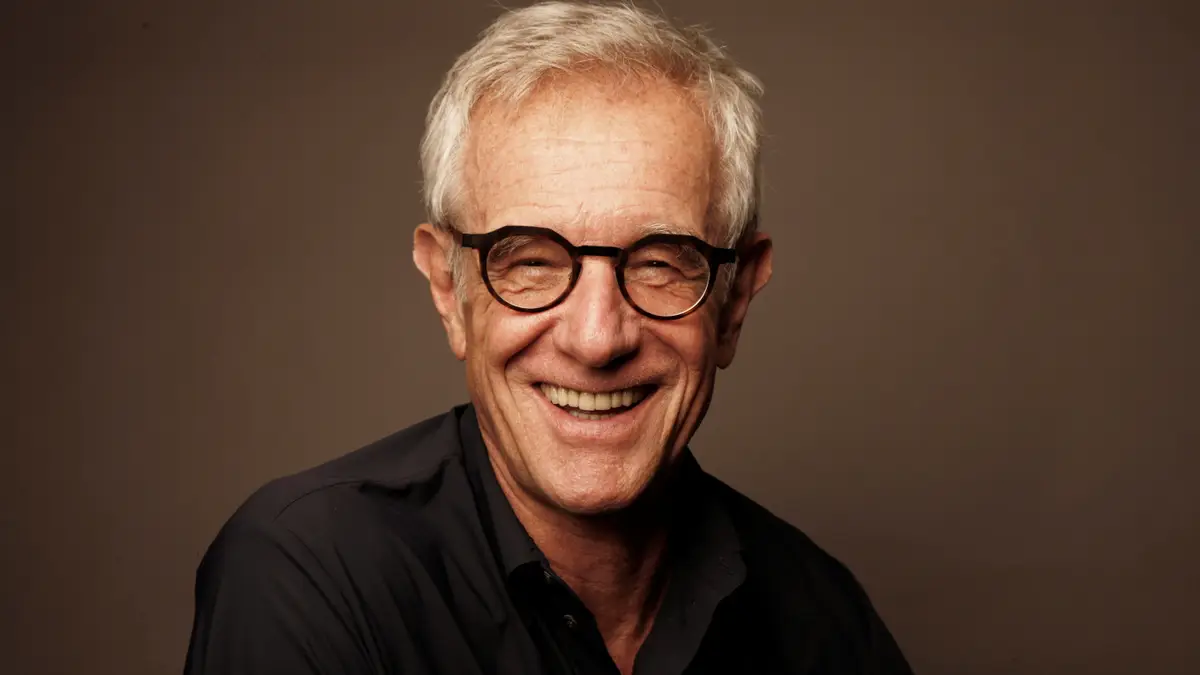
Ask most people what it takes to age well and they picture something expensive: a cabinet of supplements, a wearable for every metric, a protocol with a waiting list. Eric Verdin spends his days at the frontier of that science, and his conclusions point almost entirely in the other direction. The habits that do the most, he argues, are the ones that cost the least, and the best moment to start them is now, whatever your age.
Verdin is President and CEO of the Buck Institute for Research on Aging, one of the world's leading centres dedicated to understanding why we age and how to extend the healthy years of life. That vantage point is what makes his practical advice so striking in its plainness: walk more and sit less, protect your sleep, eat real food inside a sensible window, stay close to the people who matter, and treat most of what the supplement industry sells as expensive optimism.
We put a range of questions to him, from whether it is ever too late to begin to how a non-scientist can work out which longevity advice to trust. His answers, below, make a quietly compelling case that the unglamorous fundamentals deserve far more credit than the longevity industry tends to give them.
1. You've said a child born today has a realistic chance of reaching 100. For someone in their 30s or 40s now, how much of how we age is in our hands versus down to genetics?
Far more is in our hands than most people assume. The studies on this are quite consistent: genetics accounts for something like 50 percent of how long and how well you live. The rest, the majority, comes down to how you live, what you eat, how much you move, how you sleep, the quality of your relationships, and the environment around you.
So for someone in their 30s or 40s, the honest and rather empowering answer is that your genes load the gun but your lifestyle pulls the trigger. You are not a passenger. The decisions you make in the next few decades will matter enormously for how the last ones look.
2. A lot of people quietly feel they've already left it too late to bother. Is there an age where the basics stop making a difference?
No, and I want to say that as clearly as I can, because it stops a lot of people before they start. There is no age at which movement, better food or better sleep stop helping you. We see meaningful benefit from exercise begun in the 70s and 80s. Muscle responds to training at any age. Blood pressure, blood sugar, inflammation, all of these improve when you change your behaviour, regardless of when you start. The best time to begin was twenty years ago; the second best time is today. It is genuinely never too late to bother.
Free Guide: Slow Aging Guide
6 Easy Practices to Start Now
(Even if you’re short on time or motivation)
By subscribing you will also be signed up for the New Zapiens newsletter
25,000+ Downloads • 100% Free
3. You frame it as not just what you eat, but when you don't eat. For someone who's never tried it, what's the simplest version of time-restricted eating they could start this week?
Keep it simple: pick an eating window of eight to ten hours and keep everything inside it. If you have your first meal at nine in the morning, you finish dinner by seven in the evening. That's it. You don't need to change what's on the plate to begin, just when it happens. The two easiest wins are stopping eating about three hours before you go to bed, and not grazing late at night. Most people find that simply closing the kitchen after dinner does most of the work. Start there for a week and see how you feel.
4. Intermittent fasting is everywhere right now. What does the evidence genuinely support, and who should be careful with it?
The evidence is strongest for the milder, more sustainable version: time-restricted eating, an eight-to-ten-hour window. It reliably improves metabolic markers, helps with weight, and aligns eating with our circadian biology. What the evidence does not support are the extreme, heroic fasts that some people talk themselves into. More is not better here. And it isn't for everyone. Anyone who is pregnant or breastfeeding, anyone who is underweight or frail, anyone with a history of an eating disorder, and people with diabetes on blood-sugar-lowering medication should only do it under medical supervision, if at all. For that last group the risk of hypoglycaemia is real. If in doubt, talk to your physician first.
5. You've described physical activity as the best anti-ageing medicine we currently have. For someone who isn't a gym person, what's the minimum that genuinely moves the needle, and does simply sitting less matter as much as a structured workout?
You don't need a gym. The single most striking finding in this field is how much benefit comes from simply walking, and most of it arrives within the first 5,000 steps a day. That is achievable for almost anyone. And yes, sitting less matters enormously on its own. Prolonged, unbroken sitting is metabolically harmful in a way that a single workout doesn't fully undo, so getting up every half hour, taking the stairs, walking while you're on the phone, that all counts and it adds up. If you can layer in a little resistance training a couple of times a week to preserve muscle, even better. But the floor, walk more and sit less, is where the biggest returns are, and it's free.
6. Inflammation gets blamed for almost everything now. In plain terms, what is chronic inflammation, and how would someone know if it's affecting them?
Acute inflammation is good and necessary: it's how your body fights an infection or heals a cut, and then it switches off. Chronic inflammation is different: it's a low-grade, smouldering activation of the immune system that never fully turns off. We call it 'inflammaging,' and it's one of the underlying drivers of nearly every age-related disease: heart disease, diabetes, Alzheimer's, cancer. The tricky part is that it's largely silent. You won't feel it the way you feel a sprained ankle. If you want to know, a simple blood test for high-sensitivity CRP gives a reasonable window into your baseline level, and it's worth asking your doctor for.
7. What are the everyday habits that quietly push inflammation up, and the simple ones that bring it down?
The things that push it up are, unfortunately, the modern default: carrying excess visceral fat around the middle, poor and insufficient sleep, a diet heavy in ultra-processed food and sugar, smoking, chronic psychological stress, and sitting all day. The things that bring it down are reassuringly ordinary: regular physical activity, protecting your sleep, eating more plants and fibre, adding omega-3-rich foods like oily fish, keeping alcohol moderate, and not smoking. Notice there's nothing exotic on that list. The same handful of habits that lower inflammation are the same ones that help almost everything else.
8. The longevity supplement industry is enormous. As a scientist, how do you tell someone which ones are worth their money and which aren't?
I'm a scientist, so I go where the evidence is, and for most of what's marketed as 'longevity supplements,' the honest answer is that the human evidence simply isn't there yet. A great deal of it rests on studies in mice or in cells, which is a very long way from a proven benefit in people. My rule of thumb is straightforward: be sceptical of anything sold with certainty, anything promising to reverse ageing, and anything where the person selling it also profits from it. Where supplements genuinely earn their place is in correcting a deficiency: vitamin D and B12 if your levels are low, omega-3 if you don't eat fish. Those are worth it. Most of the rest is expensive optimism.
9. If someone has a limited budget, where should the first euro go: food, movement, or supplements?
Not supplements, that's the easy part of the answer. Movement is nearly free and gives you the highest return of anything we know, so it costs you almost nothing and should come first. After that, spend on food: real, unprocessed food, plenty of plants, adequate protein. Supplements come a distant third, and only to fill a genuine gap. If you spend your money in that order, move first, eat well second, supplement last, you'll get far more health per euro than anyone chasing the latest pill.
10. Someone reading this is drowning in conflicting longevity advice from every podcast and influencer. As a scientist, how should a normal person decide who to trust?
Look for a few signals. First, does the person acknowledge uncertainty? Real scientists are comfortable saying 'we don't know yet,' because that's the honest state of most of this field. Anyone selling total certainty is a warning sign. Second, follow the incentives: is this person also selling you the product they're recommending? Third, ask where the claim comes from: a single mouse study is a hypothesis, not advice for humans. And finally, notice that the genuinely well-supported advice is almost boring: move more, eat real food, sleep, don't smoke, stay connected to people. When someone's message is exciting, expensive and certain, be careful. When it's modest, cheap and a little dull, it's probably closer to the truth.
11. Sleep, stress and even friendships keep surfacing in longevity research. Which of these do people most underestimate?
Social connection, without question. People will optimise their diet down to the gram and track every step, and then completely overlook the fact that loneliness and social isolation carry a mortality risk on the order of smoking. The data here are remarkable and consistently underappreciated. Strong relationships, a sense of belonging, people you can rely on: these are not soft extras to health, they are central to it. Sleep is underrated too, but connection is the one people most often forget to count as 'health' at all.
12. Stress advice can feel vague. What's one thing that has genuinely worked, in the research or in your own routine?
Two things, and they happen to be well supported and things I actually do. The first is exercise: it is one of the most reliable stress regulators we have, and for me getting out on the mountain bike does as much for my head as it does for my body. The second is a regular mindfulness or meditation practice; even ten minutes has measurable effects on the stress response over time. The key with stress isn't to eliminate it, which isn't realistic, but to build a habit that reliably discharges it. Find the one that fits your life and do it consistently.
13. Forget the lab for a moment. What does your own week actually look like, the habits you genuinely keep rather than the ones you study?
Nothing exotic, honestly. I eat within a window of about eight to nine hours a day and stop eating well before bed. A few times a year I do a fasting-mimicking diet as a kind of reset. I exercise regularly; mountain biking is my great joy, and it doesn't feel like a chore, which is the whole point. I protect my sleep and treat it as non-negotiable. I take a few supplements where I know I need them: vitamin D, B12, omega-3. And I try to keep the stress in check and stay close to the people who matter to me. None of it is heroic. It's the ordinary basics, done consistently, which is exactly what the science keeps telling us works.
14.What's the longevity myth you most wish would disappear?
The myth of the magic bullet: the idea that there is a single pill, molecule or supplement out there that will let you skip the work and simply reverse ageing. It's an appealing story and it sells extremely well, but it isn't how the biology works. Ageing is driven by many interconnected processes, and what actually moves them is the unglamorous combination of how you eat, move, sleep and connect. I'd love for people to stop waiting for the miracle and start with the fundamentals, which are already in their hands today.
15. If you could get every reader to change one habit starting Monday, what would it be?
Move, every single day. Not necessarily a workout, just walk. Aim for those first several thousand steps, break up the hours you spend sitting, and make it something you do daily rather than occasionally. If I could get everyone to do just one thing, it would be that, because no other single habit gives back as much across the body and the brain, and it costs nothing to start on Monday.
Free weekly newsletter
Your weekly brief on
living longer – without
overhauling your life
10,000+ readers get smarter about their health every Thursday. Join them.
- Science broken down for real life
- Daily health routines from leading experts
- Free health guides & tools every week
No spam. Unsubscribe anytime.
Read by 10.000+ health-conscious readers.


Author: Eric Verdin
Dr. Verdin is the President and CEO of the Buck Institute for Research on Aging. His laboratory studies the relationship between ageing and the immune system. A native of Belgium, Dr. Verdin completed his clinical and research training at Harvard Medical School. He has held senior appointments at several international medical schools, and is also a professor of medicine at University of California, San Francisco.
You might also like