

Dr Moritz Przybilla: A Cancer Biologist on What Really Matters for Long-Term Health
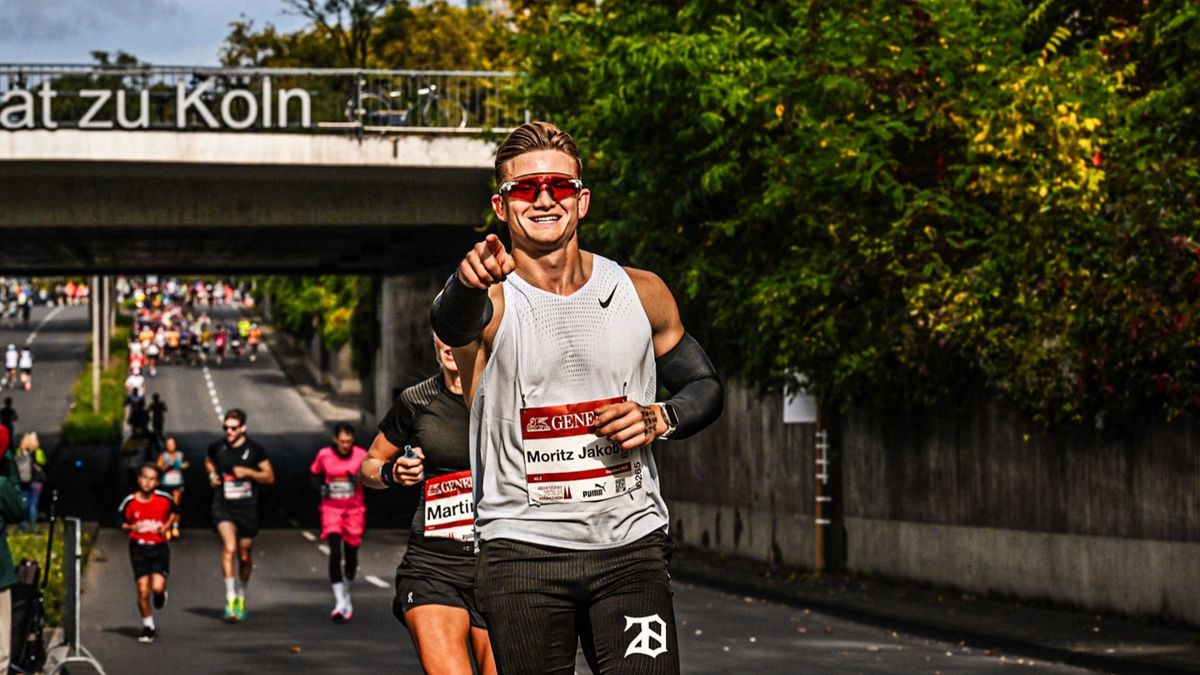
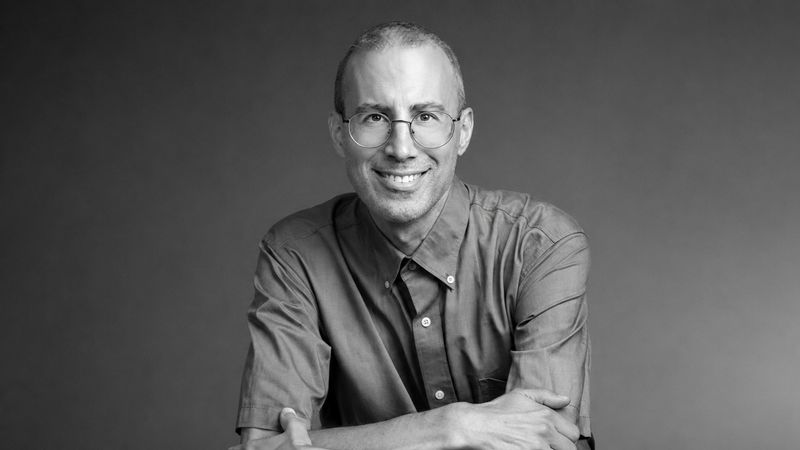
Dr Moritz Przybilla is a cancer researcher at the Wellcome Sanger Institute in Cambridge, one of the world’s leading genomics centres. Holding a PhD from the University of Cambridge, he is at 30 already one of the sharper minds working on a question the longevity community hasn’t fully grappled with yet: what is actually happening inside your cells, decades before any diagnosis.
His work sits at the intersection of ageing and cancer prevention, looking at how everyday exposures, from smoking and alcohol to obesity and air pollution, shape our cancer risk at the cellular level, and crucially, what we can do about it earlier. He was recently awarded a Biology to Prevention Award alongside his supervisor, one of the most cited scientists in the field.
Moritz is also a certified personal trainer, and he is refreshingly blunt about the gap between what the science actually shows and what the wellness industry sells.
In this interview, he tells us what longevity enthusiasts are getting right, what they are overrating, and why the most powerful thing you can do for your long-term health is probably less exciting than you hoped.
You can follow his research updates on Instagram.
1. Every time a cell divides, it copies its DNA - and small copying errors add up over a lifetime. You study how those errors accumulate and how they relate to cancer. Can you walk us through what that actually looks like inside the body, and why someone who feels perfectly healthy today should pay attention to it?
Every organ carries mutations in potentially cancer-relevant genes as we age - that is a natural process. What surprised the field was discovering this in normal, healthy tissues. Organs are not static structures but dynamic ecosystems of thousands of genetically distinct clones. Driver-rich clones can occupy up to a quarter of sun-exposed skin, over half of the oesophageal lining, and roughly 80% of endometrial glands - yet actual cancer rates remain far below 1%. That paradox is what demands explanation. The molecular story unfolding inside your tissues is far more complex than how you feel on any given day.
2. Your research has looked at how things like smoking and alcohol physically alter the DNA inside our cells. What surprised you most about how everyday habits show up at that level - and are there any that people underestimate or overlook?
Beyond direct DNA damage, some exposures drive cancer without mutating DNA at all - they are selectogenic rather than mutagenic, favouring the expansion of clones already carrying driver mutations. The most important carcinogens are now fairly well understood scientifically. Where genuine underestimation exists is around obesity, air pollution, and vaping. Obesity in particular is a powerful selectogenic exposure that most people still don’t associate with cancer risk. Vaping is a newer exposure and the long-term data simply isn’t there yet.
Free Guide: Blood Testing Guide
Your Health Journey Starts With Your Blood
(Even if you’ve never done a test before)
By subscribing you will also be signed up for the New Zapiens newsletter
25,000+ Downloads • 100% Free
3. One of your findings was that when people quit smoking, healthier cells in the airways gradually crowd out the damaged ones - the lungs partly rewrite themselves. Has that kind of resilience shown up elsewhere in your research?
This has only been observed in the proximal airways, not across the lung as a whole. After quitting, healthier cells expand and replace smoking-damaged clones - and appear as though they have never been exposed to cigarette smoke, even in people who smoked heavily for decades.
Nothing quite like that regenerative capacity has been observed elsewhere. In the liver, clones acquire mutations in metabolic genes that allow them to survive hostile environments - chronic high fat or alcohol exposure. It is a different kind of adaptation: not replacing damaged cells, but rewiring them to endure. Tissues are not passive recipients of damage but active, evolving systems that push back.
4. Most cancer prevention advice hasn’t really changed in decades. But the science has moved a long way since then. What does prevention actually look like when you’re working at the cutting edge of it?
Part of the reason public-facing advice hasn’t changed is that there isn’t a great deal more an individual can act on right now. The fundamentals remain sound because they address genuinely powerful risk factors. Where the cutting edge lies is in chemoprevention - drugs that intervene before cancer becomes clinical disease - though this field has been constrained by the scale and timescale of trials.
The bigger momentum now is towards personalised screening and early detection: catching cancers at stage I or II when they are curable. This is prevention of mortality rather than of the disease itself - a distinction the public conversation hasn’t fully caught up with.
5. There’s a lot of confusion in the longevity community between prevention and early detection. From where you sit, which is the bigger opportunity?
Stopping cancer from developing entirely is impossible. Cancer is ingrained in human existence, in Darwinian evolution, in the way we are built. The longer we live, the more likely it becomes that a cell misbehaves. What we can do is fundamentally change the outcome through early detection. The goal is for cancer to become a manageable, chronic condition rather than a fatal one - built on better screening, personalised risk stratification, and earlier detection. And it needs to reach public health systems, not just private healthcare.
6. Companies like Grail and Ahead are now selling cancer screening directly to consumers. Are these tests actually delivering on that promise, or is the marketing running ahead of the evidence?
It is a mix of both. Multi-cancer early detection tests still have real limitations - results from the PATHFINDER study evaluating Grail’s Galleri test show they do not yet detect cancer early enough to fulfil the promise being made to consumers. That said, they can still be valuable, particularly for cancer types that currently lack any screening programme. The harder problem is the sheer difficulty of the task: detecting fifty cancer types simultaneously from vanishingly small signals in a blood sample.
More immediate promise lies in single-cancer tests - FirstLook by DELFI for lung cancer, SHIELD by Guardant Health for colorectal cancer, and Oncoguard by Exact Sciences for liver cancer are all showing strong early-stage performance.
7. You recently published research on detecting DNA damage in healthy tissue. How close are we to an ordinary person being able to get that kind of test?
The study mapped somatic mutations in the oral epithelium across roughly 1,200 individuals using entirely non-invasive sampling - buccal swabs and blood samples. The next step is determining whether these mutational patterns can actually predict cancer risk, through case-control studies across several organ sites including the mouth, lung, breast, oesophagus, and bladder.
The hope - still a hope at this stage - is that specific mutational biomarkers will allow risk stratification. If that holds up, a simple non-invasive test that tells you something meaningful about your personal cancer risk could be available in the not-so-distant future.
8. A lot of our community invests heavily in longevity - fasting, cold exposure, supplements, the works. What actually has solid evidence behind it, and what do you think people are overrating?
The single greatest risk factor for cancer is age, and you cannot stop ageing. Most interventions that generate excitement in the longevity community - fasting, cold exposure, supplementation - probably have a very small, perhaps even undetectable effect in the grand scheme of things.
What actually moves the needle is far less glamorous: eat well, sleep well, exercise frequently, avoid smoking, limit alcohol. Layer on regular screening and you are as well-positioned as the evidence allows. The fundamentals, done consistently, remain the most powerful tools we have. And none of it is a guarantee - you can do everything right and still be unlucky. But it shifts the odds meaningfully.
9. A lot of people in our community take supplements like NMN or CoQ10 to support mitochondria. Based on what you’ve actually seen in the data, do those supplements do what people hope?
Mitochondria are fascinating - they carry their own DNA, follow their own evolutionary dynamics, and operate largely independently of the nuclear genome. What the data suggest is that the cell probably doesn’t care all that much about the fate of any individual mitochondrion.
Mitochondrial evolution happens independently from the host cell, and most of it does not appear detrimental at all. At the level of the whole organism, NMN or CoQ10 are unlikely to move the dial in a way you would notice. The biology is too buffered, too redundant for that. Do the basics right - that is where the evidence consistently points.
10. You’re a certified personal trainer as well as a cancer researcher. Does what you see under the microscope actually change how you live day to day?
I’m thirty now, and for the last three or four years I’ve definitely been paying closer attention - though that wasn’t always the case. I drink only occasionally now, if at all - and not solely because of the carcinogenic effect, but because of what alcohol does to sleep. Sleep has become a real priority: noise, darkness, temperature, consistent timing. I focus on both strength and endurance and exercise essentially every day. For nutrition, I live by an 80/20 rule - if you’re making good choices 80% of the time, you’ve earned the freedom to be less strict the other 20%. Sustainability is what matters over decades.
11. Walk us through your own daily routine. And honestly: has spending years studying how the body ages made you more worried about it, or less?
Definitely less worried, not more. Studying how the body ages has given me a clearer sense of what I can control and what I cannot - and a certain peace with that distinction.
As humans, we have to accept the reality that not everything is in our own hands. You can do everything right and still develop cancer comparatively early. That’s not fatalism - it’s biology. What we can do is reduce our risk to a level that feels acceptable to ourselves, and then live well within that.
I wouldn’t compromise my quality of life beyond a certain point in pursuit of marginal gains, precisely because I know from the data that beyond a solid foundation, the returns diminish sharply. Do the fundamentals consistently, get screened when it’s appropriate, and then give yourself permission to actually enjoy your life. That, to me, is what it means to take science seriously without being imprisoned by it.
12. If this field keeps moving at the pace it’s moving - what becomes possible for a regular person in ten years that simply isn’t possible today?
In ten years, I hope we will have fundamentally shifted how we relate to cancer as a society. I’d like to see a world where cancer is treated as a chronic, manageable condition - where robust screening tests are available to anyone who wants them, and where we’ve revived chemoprevention as a serious clinical discipline.
For individuals at highest risk - whether due to lifestyle, environmental exposure, or genetic predisposition - I want us to have medications in place. Think of it as the statins for cancer: low-dose, well-tolerated drugs that actively lower your risk, prescribed as routinely as we prescribe cholesterol medication today. Almost a different kind of supplement - except one grounded in rigorous evidence.
I genuinely believe this is achievable. Science is moving in the right direction, and if we commit to it - as researchers, as clinicians, and as health systems - I’m confident we can get there.
Free weekly newsletter
Your weekly brief on
living longer – without
overhauling your life
10,000+ readers get smarter about their health every Thursday. Join them.
- Science broken down for real life
- Daily health routines from leading experts
- Free health guides & tools every week
No spam. Unsubscribe anytime.
Read by 10.000+ health-conscious readers.

Author: Moritz Jakob Przybilla
Hi, I'm @dr.moritzprzy — cancer researcher at the Wellcome Sanger Institute, marathon runner, HYROX competitor, and coach. I study how DNA changes drive cancer risk and how we can prevent it. My life follows the 80/20 rule: get it right most of the time, give yourself room to breathe for the rest. No perfectionism, no forbidden foods — just science-based training and nutrition that fits your real life.